

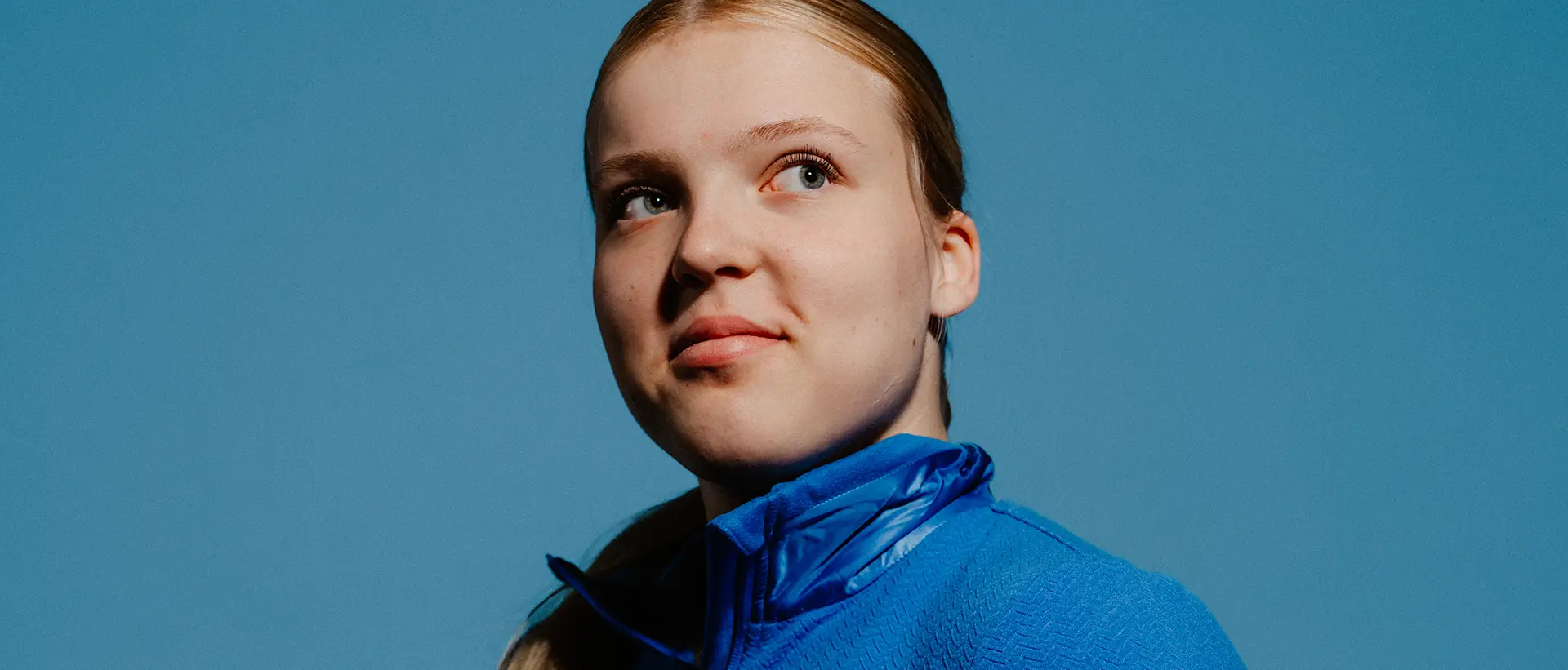
Sometimes you just know. Sometimes, in some inexplicable way, it becomes clear that a person has exceptional abilities. In the case of Minni Hormavirta, the European Youth Weightlifting Champion and World Championship medalist, this was evident from a very early age.
– We have four children in our family, all close in age. Even as a toddler, Minni stood out from her siblings because of her build. When Minni was 2 years old, we were in the sauna, and a 10-liter basin full of water had been left in the washroom. When Minni noticed it, she grabbed the edges and lifted it effortlessly from the washroom onto the sauna benches. That’s when it hit me — that thing must weigh something, recalls her mother, Maria Hormavirta.
Her talent was already evident in elementary school.
– According to the teacher, one of the popular recess games among Minni’s classmates was “Let’s try to knock Minni over.” It was all in good fun; the game was a bit like a game of tag, and even a larger group usually couldn’t knock Minni over. Minni also liked to wrestle and arm-wrestle with her older brother’s friends, who were four years her senior. The matches were evenly matched, even though four years is quite an age difference at that age. Boys her own age didn’t want to compete against Minni, Maria Hormavirta chuckles.
A strong and athletic girl, she practiced artistic gymnastics, track and field, and soccer, but it was at coach Laura Niemelä’s gym that everything finally clicked.
– My mom had been taking CrossFit classes, and I wanted to join in. There wasn’t a separate group for kids, but there was a weightlifting group. It seemed boring at first, but that was because the weights were so light. Once they put some real weights on the bar, it immediately became more interesting, Minni Hormavirta recalls.
Coach Niemelä says he immediately noticed the 10-year-old girl’s physique and strength.
– You could tell right away that she had natural athletic ability. For her age, Minni was well-built and muscular, and she had exceptional strength, says Niemelä.
Niemelä has his own gym where the pair trains. Key elements of the coach’s philosophy include ensuring proper muscle balance and good lifting mechanics, increasing strength levels in a carefully controlled and gradual manner, and monitoring recovery and technique.
– From the very beginning, the goal has been to have a long and injury-free career. We’ve kept the training volume at an optimal and varied level. During sport-specific training, we make sure to maintain the barbell’s momentum and the quality of movement. In practice, I participate in almost all training sessions, which makes it easy to regulate and adjust the intensity and technical difficulty. I am very precise and demanding when it comes to technique. On the mental side, it’s important to maintain a sense of relaxation and purpose, even as the level of expectation continues to rise, Niemelä explains.
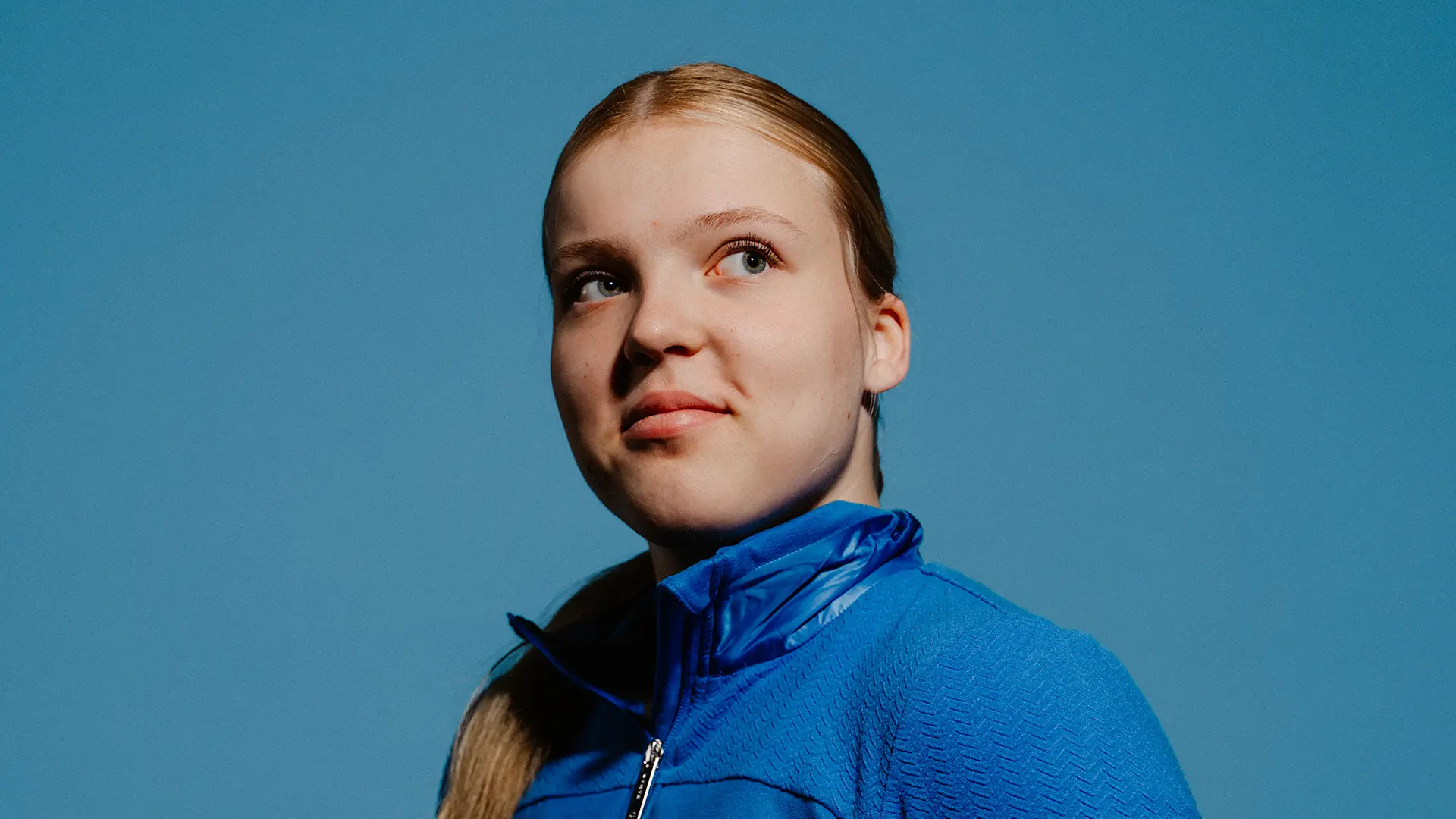
The barbell felt light, and suddenly I was the European champion. That’s when I realized I’m actually pretty good!
A quarter of a million reps
At the top level, weightlifting is a sport of small margins, whose subtleties are rarely apparent to outsiders. Hormavirta analyzes her lifts purely from a technical standpoint.
– Iron is always iron, but in weightlifting, it’s all about rhythm and technique. If the bar is even a centimeter too far back or too far forward at any point in the lift, you can’t compensate for it with sheer strength — the lift will fail.
Besides, there are differences even among iron products.
– At the top level, every lifter has their own feel for the bar and the conditions. For me, the best is a rough bar that rotates well. The manufacturer matters; equipment from different brands doesn’t feel the same. Air conditioning is also important — it can’t be too hot, and there has to be enough oxygen. The best vibe comes when the venue isn’t too big, there’s a good crowd, and the atmosphere is intense.
Hormavirta feels the excitement of the competition day since the morning. There’s a pleasant buzz in the air, and she can’t wait to get on stage.
– During my warm-up, I focus on my breathing. On a good day, the oxygen flows freely and my legs feel fresh, but there’s still some tension in them. I have a great feel for the bar, the weights feel light, and my technique clicks into place.
By then, her body will be ready, and it will be time to step into the spotlight.
– Right before I go on stage, the coaches tap me on the shoulders and thighs, and I focus my energy. It brings me back to the moment: Here we go, I’m ready.
On her best days, the lifter is free and unrestrained on the platform. On those days, Hormavirta’s straight arms can lift 101 kg in the snatch and 129 kg in the clean and jerk.
Of course, there are other kinds of days in elite sports as well.
– The worst disappointment for a weightlifter is failing to achieve a result. That happens too, since everything hinges on the smallest details, and the competition is often very tactical in terms of which weights to attempt on each lift.
– When I fail, it takes a moment to get over it, but I don’t dwell on what happened for long. I go back to the gym and keep working. That’s when it’s important to get back into my routine quickly. I always focus on the next lift, whether it’s a workout or a competition. I try to make the next lift the best one ever.
Over the years, an unimaginable number of repetitions have been used in the quest for the perfect lift.
– The program includes an average of five weightlifting workouts per week, with the barbell being lifted off the ground more than 100 times in each session. In addition, the weekly program includes two supplementary workouts.
About ten years, five workouts a week, a hundred reps in each workout. Roughly a quarter of a million reps, and the hunt for the best continues.
Next Generation offers support and peace of mind
Having grown up in a sports-oriented family, this young weightlifter has received considerable support from his family throughout his career.
– When I was a kid, we watched a lot of sports on TV at home, and my family encouraged me to play sports. Back then, major tournaments and national teams seemed like something far removed from my own life. Even though I was strong, I didn’t initially think I could ever compete at the international level myself, Hormavirta says.
– However, there was a great atmosphere at the gym right from the start, I saw results quickly, and I liked the fact that in an individual sport, my progress was clearly visible and measurable.
Then came 2022 and the European Youth Championships — Minni’s first time representing Finland.
– I was nervous, but it felt great — everything was new and huge. Wearing the blue-and-white flag on my shirt felt amazing. The barbell felt light, and suddenly I was the European champion. That’s when I realized I’m actually pretty good!
Her rapid rise to the top of the continent’s junior ranks gave her a new burst of energy, and her medal collection quickly grew to include more European Junior Championship medals, as well as a silver and a bronze from the World Championships. She also set new European junior records.
– All this progress and success has come surprisingly easily. I had thought it would be harder to reach the top. On the other hand, everything is relative. I’ve trained a lot, and my training has become more professional year after year. But lifting has remained fun, and everything has worked out well.
Following her success, Hormavirta was selected in the spring of 2026 to join the Finnish Olympic Committee’s Next Generation program.
–The support from the Olympic Committee and the grant from the Ministry of Education make everyday life easier. I don’t have to worry so much about resources. The program also offers an interesting opportunity to meet other young people my age who are striving to reach the top of the world in their own sports, says Hormavirta.
What is Next Generation Team Finland?
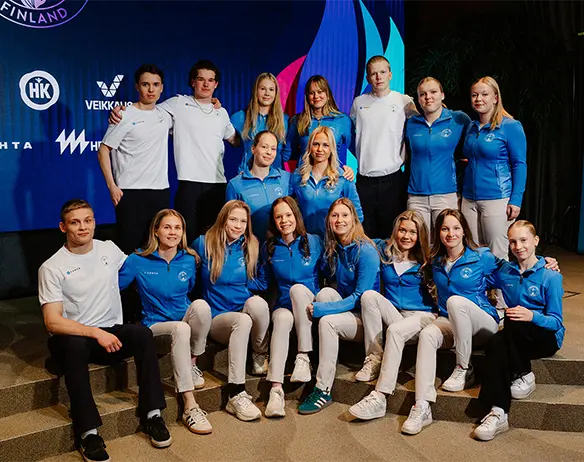
The Finnish Olympic Committee has launched the Next Generation program, aimed at elite young athletes aged 15–22.
The program aims to better identify athletes with the potential for success and help them reach the absolute top of the world. In the first phase, 21 young athletes have been selected for the program, including weightlifter Minni Hormavirta.
Through the program, each young person receives a personalized support package worth over 10,000 euros, which includes funding, expert guidance, products, and services. The program is implemented in collaboration with sports federations and the elite sports network.
The goal: a lifelong career in sports
Even though a young weightlifter is willing to give it their all to win medals at major adult competitions, winning isn’t the whole picture in sports.
– I want to aim for the top; I’ve been serious about this from the very beginning. But I also play sports for the joy of it and for the sports community. Trips abroad and new experiences, the atmosphere at the home gym — these are a source of strength in life. The national team, friends, and coaches: they’re all amazing people and the best friends you could ask for.
For Hormavirta, a sophomore at Lohja High School, a lifelong journey in sports lies ahead.
– Once high school is over, I’ll start training full-time! Right now, I’m not thinking about any other career. I want to go all out toward my goals and give it my all. After my competitive career, there are many opportunities to continue in sports in other roles. I don’t necessarily need a career other than a lifelong journey in sports.
The lifter representing Lohja Lifting realizes that his easiest years of development are likely behind her.
– Reaching the top of the adult world requires a tremendous amount of extra work. Fortunately, our national team already has top-level lifters like Janette Ylisoini. She has shown that the world’s top level is within reach. In a high-quality national team, lifting pushes everyone to go beyond their own limits, and that fosters growth.
Among this great group, there is also a growing belief that the value of sports lies not only in the results, but also in the people involved.
– It’s important to me to be a good person and a good friend. I want to be encouraging and upbeat, and to be able to be happy for others’ successes as well. We have an amazing sports community, and it gives strength to everyone, but we also have to do our part for the good of the community.
Hormavirta is convinced that her lifelong journey in sports will be a resounding success.
– I like to think that this journey is worth taking even without those gold medals. The time spent at the gym is the best time of a person’s life.
Text translated with the help of AI.