

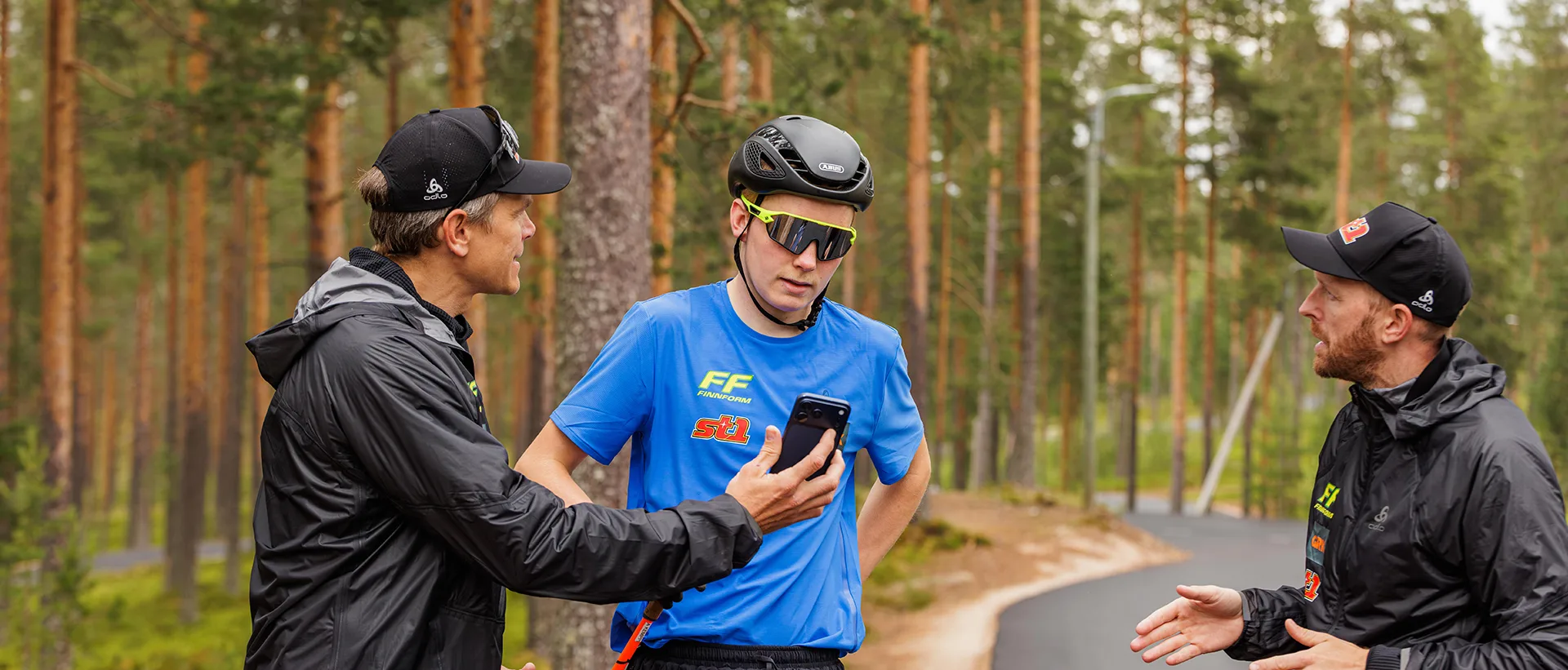
After the Olympic season, the Finnish Ski Association boldly recruited a new head coach from abroad, built a coaching team that shares responsibility for the whole squad, and fine-tuned the coaching philosophy of the cross-country national team. The goal is a team whose athletes own their careers, share their knowledge and dare to say out loud that they want to win.
– The change may take an Olympic cycle, but the first signs are already visible, says Petter Kukkonen, Director of High Performance at the Finnish Ski Association, who was responsible for putting the coaching set-up together.
In sport, a change of direction is easily read as a completely fresh start, as if things had not been done right or well before. Kukkonen rejects that idea and points to the success of the cross-country team, especially at the PyeongChang and Beijing Olympics.
– We had really great results at the Olympics, and in my eyes the work done in Finland is of high quality. People do it with passion and put a great deal of time into it. But we have to admit that top-level success has rested on the shoulders of individual athletes. When you look at the big picture – the World Cup, the juniors, the World Championships – we have been behind the best nations for a long time. That is why I wanted to look at the whole and interviewed a lot of people to understand what is needed.
Lessons for broader success were sought from Sweden and Norway, which have achieved success as teams: Sweden especially among the women and Norway among the men. The Swede Joakim Abrahamsson, who grew up in the north, was appointed head coach to lead the coaching team.
Team first and Swedish diplomacy
According to Kukkonen, the national team’s shared goals needed to be clarified and its culture of cooperation strengthened. The aim was set for a team built on shared values and rules of play, in which the athletes are on an equal footing.
– Team members need to understand that it is not only about me, but also about how the others around me are doing. It is good to have others around who are better than you and who challenge you. Women and men must also be on an equal footing, so that everyone gets the same service from the same source, Kukkonen says.
Abrahamsson’s task is to put the jointly made strategic plan into practice and to root team thinking at many levels. The national team is now led by a team of three coaches on an equal basis, even though Abrahamsson is the head coach. The trio also includes Norwegian Hans Kristian Stadheim and Matias Strandvall, a former top sprinter on the Finnish national team.
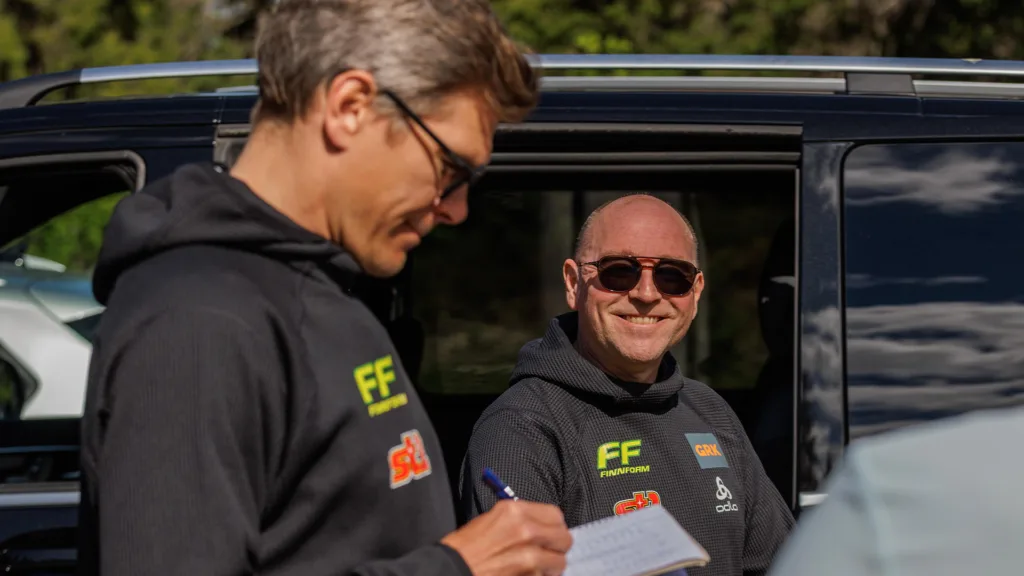
– Hans Kristian has a PhD in training physiology and brings strong research knowledge into daily training. Matias is a former top athlete and knows sprint, and both of them are extremely good at meeting people. We also complement each other in personality. Matu tells me that in Finland you need to be more direct, not something in between, laughs Abrahamsson, who admits to being the Swedish diplomat.
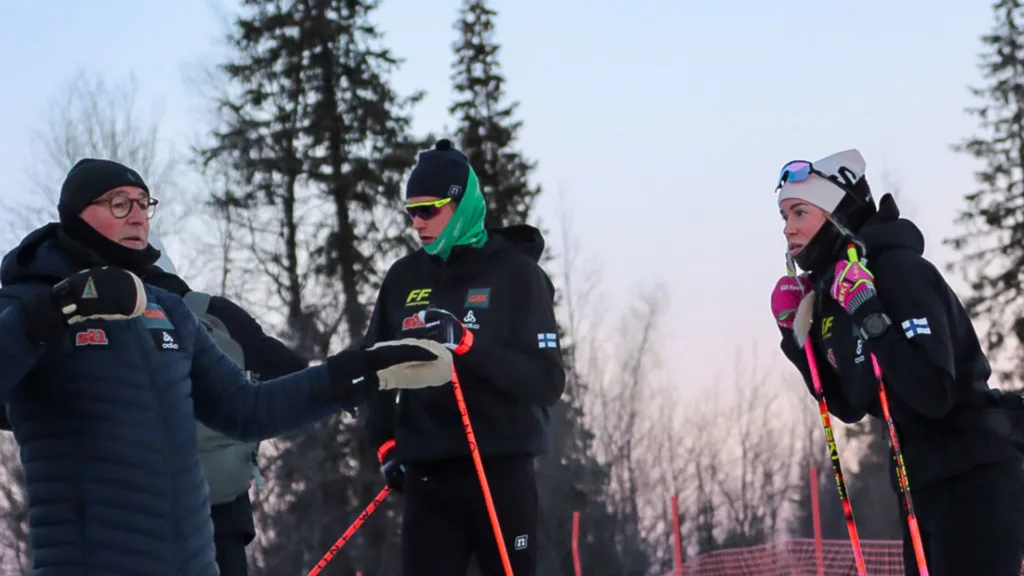
At training camps, the trio coaches together. The women’s and men’s schedules are arranged so that all three pairs of eyes are present at the sessions. In the race season, Stadheim is responsible for the men and Strandvall for the women, but in sprint races Strandvall’s expertise is used for the men as well. At times, Abrahamsson’s role is to follow the session from the background and observe how the athletes act under pressure and when they are tired.
— I have hired two extremely competent coaches. If I only use them to carry the water bottles, they will quit after one year. When I show trust in them, they run the session, and I can focus on following the athletes.
The stronger team culture is already visible in the athletes’ commitment to working together. At the heart of Abrahamsson’s philosophy is the learning environment, which is the basis for sharing and receiving knowledge and also guides the training. It is a culture of giving and receiving: if I give something to you, I get something back.
Giving a training partner resistance also benefits the stronger athlete. A shared session leaves room for observation and sharpens one’s own thinking.
— At the camp in Livigno, after an interval session, the athletes were analysing each other’s pacing and technique. We coaches were happy to see that the learning environment had got going and the athletes were learning from each other. It will take time, but from the small steps we can see that things are really happening, Abrahamsson says.
Kukkonen has heard the same.
— The athletes have fun together, they tease each other and eat together. The team has started to come together. The foundation is trust, strong values and understanding what the team means. Good training is built on top of that, and then you also get much more out of it.
Ambition in research and education
While putting together the big picture, Kukkonen studied the systems in the neighbouring countries. It confirmed his view that Norway is ahead in high-performance sport research and in putting knowledge to use.
— The Norwegians do absolute top-level research. They have large numbers of athletes, so they can do research with comparison groups made up of top athletes only. In Finland, the challenge is small samples and studies that focus more on physical activity in general. It is a good question whether we get any transfer from those to high-performance sport, Kukkonen reflects.
Kukkonen would also like to see more ambition in research, development and innovation (R&D&I) and in coach education. According to him, cross-country skiing has had successful R&D&I projects, such as the ski grinding project, but individual projects need continuity. A higher level of education, in turn, improves the ability to absorb and use knowledge.
— Education goes hand in hand with research knowledge. At the Ski Association we have invested in education and hope that this will also change the coaching culture. Alongside communication and interaction, education is the glue that brings us together and helps raise cross-country skiing at every level.
In practice, Kukkonen’s vision is already visible in the coaching team: Stadheim brings Norwegian research knowledge into everyday work. Abrahamsson, for his part, wants to draw more than before on the Finnish support network, which he is very pleased with.
— The Olympic Committee, KIHU, Vuokatti, Rovaniemi. We get a lot of support and knowledge. There are a lot of possibilities, but how we use them in the best way and turn them into medals is up to us, Abrahamsson says.
According to him, shared discussions, such as the Coach’s Happy Hour sessions at camps, are also where the best practices come from, which are then built into the training. In addition, the country’s strongest training centres – from Vuokatti and Rovaniemi to Vöyri and Helsinki – have been brought together in regular joint meetings.
— At the camps we sit at the same table and talk about research, lactate measurements and what we observe in training. I want the knowledge to reach the training centres as well and be refined into best practice.
Winning comes from the athlete
When areas for development were discussed, talking about success also came up. Kukkonen hopes that people will dare to talk openly about goals and winning – not only in the cross-country national team but across Finnish sport.
— What we don’t talk about out loud becomes part of the culture, because it is tied very deeply to a feeling of shame: I do this, but I don’t really believe I can win. In many other cultures, people set goals and talk about them publicly. There is nothing wrong with that. An athlete can still focus on the small things and improve every day, but at the same time a gold medal is a really strong driver.
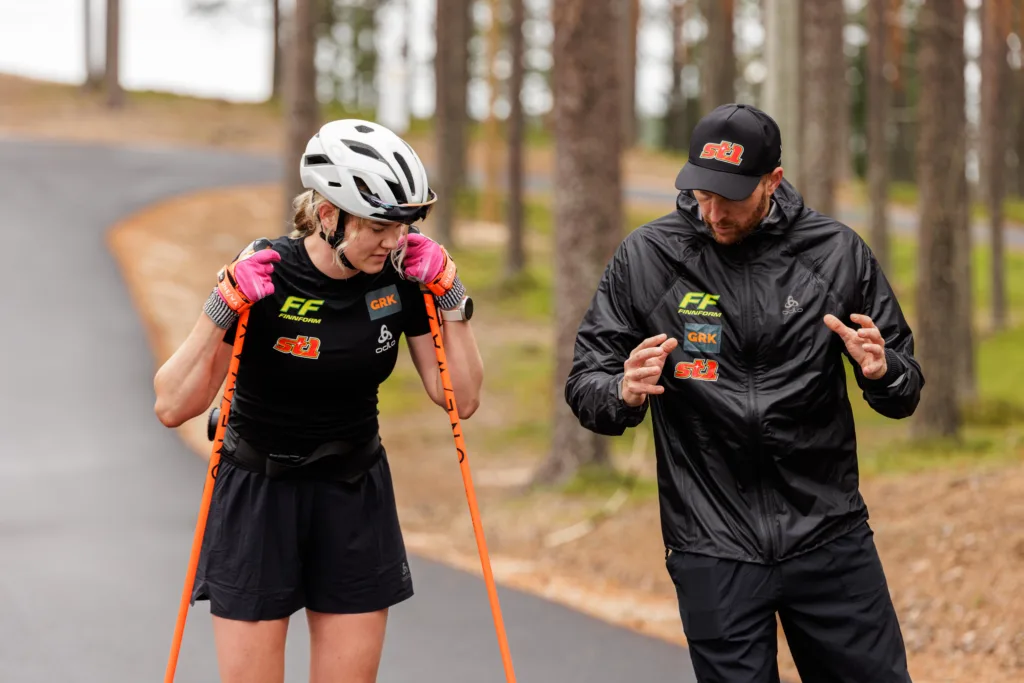
For Abrahamsson, the road to winning goes through the athletes’ ownership. Even as he brings the team closer together, he stresses that in an individual sport the responsibility ultimately lies with the athlete. Trust within the team encourages the skiers to express themselves and to act on their own skills, knowledge and feelings.
— We talk a lot about the athletes’ ownership, their responsibility for their own development. I often hear personal coaches answering for the athletes. I have been a personal coach for 25 years myself. But we need to trust that these are young, smart people with a lot of experience. They are the ones who feel what they are doing, so we need to listen to them.
Ownership of one’s career means professional thinking and action towards what the athlete really wants. Abrahamsson hopes the goals are the athlete’s own words, not someone else’s.
Abrahamsson is measured when talking about expectations, but an experienced coach has a feel for where the team stands. One thing is clear: you have to want to win and believe in it. That is why, for example, Vilma Ryytty’s win at the season-opening races at Olos mattered.
— An athlete needs the feeling that I can win. That is really important. I also remind the athletes to celebrate their successes. It is not always a win – it can be the first World Cup points, a top-20 place or a podium. Everyone deserves to be seen in a moment of joy.
We own the arena – knowing the demands of the sport, heading for 2030
Cross-country skiing is not what it used to be. The programme includes mass starts, sprint heats, team sprints and interval starts, and some distances have become shorter. Finns have traditionally been at home in interval-start races and in classic technique, but in mass starts and skating the top has been further away. According to Kukkonen, the debate about formats has gone on for at least ten years, and the same is visible at home: mass starts are hardly ever raced in the Finnish Cup.
The new coaching starts from the demands of the sport today: what a skier must be able to do technically, what physical level is needed and what kind of courses the races are held on. In the spring, work began on double poling, which also supports skating. Abrahamsson believes Finnish skiers are not far from reaching the top in skating.
The first championship test comes already this season at the World Championships in Falun. The main goals are the home World Championships in Lahti in 2029 and the 2030 Olympics in the French Alps, where the cross-country races will be held in La Clusaz. Kukkonen remembers a moment from the first camps when the new coaches were talking over coffee about winning relay gold in Lahti, in both the men’s and the women’s relay. Kukkonen laughed.
— That’s when I realised that I am a product of this culture myself. But I do believe in it. Why else would I have hired coaches like these, Kukkonen smiles.
Even so, he does not expect quick wins.
— This whole culture change is a really big job. We have set aside an Olympic cycle for it, and it has to take root across the whole field.
The new coaches also brought a slogan with them: We own the arena. When the team arrives at the stadium, it shows that the place belongs to them.