

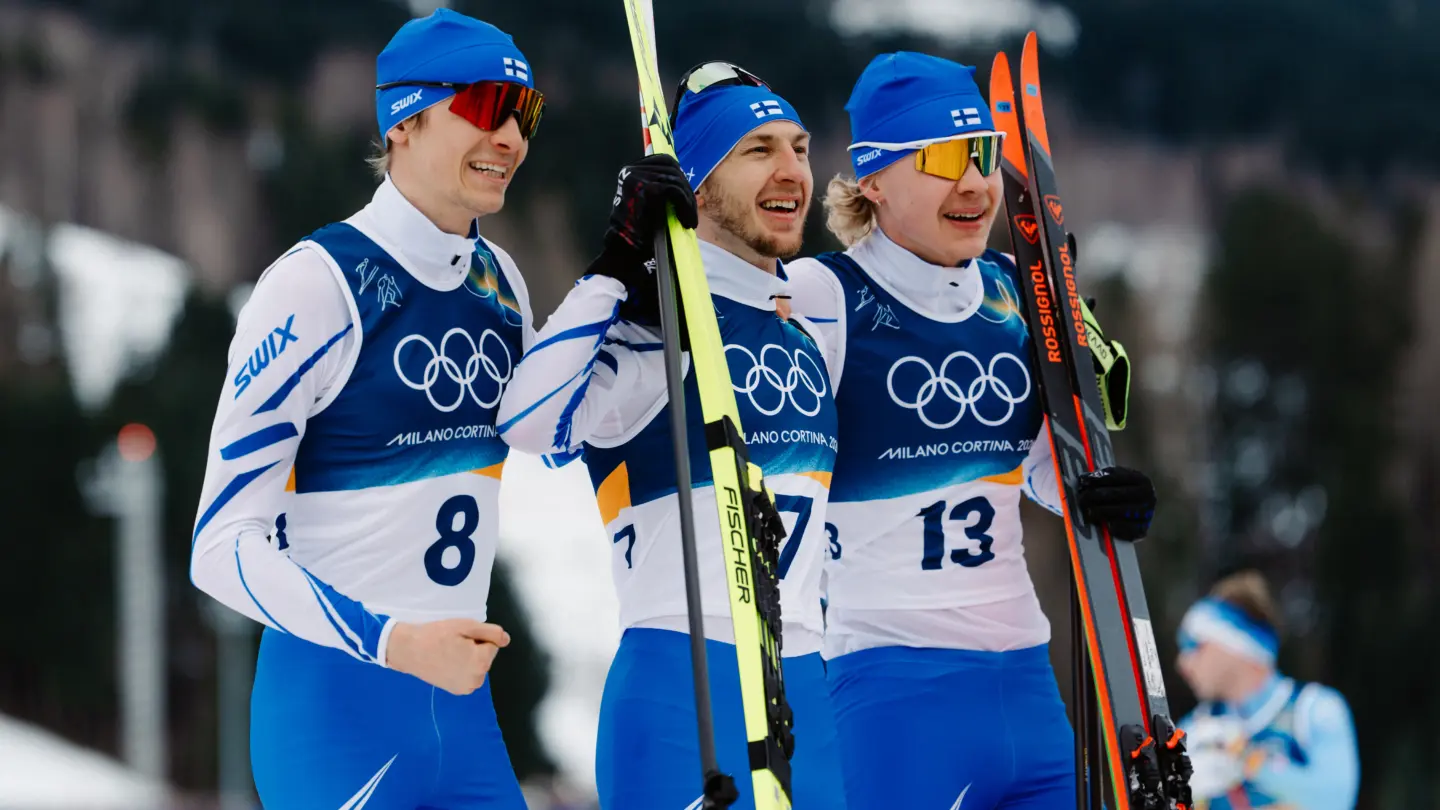
 Ilkka Herola, Eero Hirvonen, and Wille Karhumaa, Milano Cortina 2026. Photo by Jesse Väänänen.
The Executive Board of the International Olympic Committee (IOC) has approved the sports program for the 2030 Winter Olympics in the French Alps. As a result of this decision, Nordic Combined is no longer part of the Olympic program. At the same time, Synchro 9 was approved as a new discipline within the figure skating competition program.
The Nordic combined was first contested at the 1924 Winter Olympics in Chamonix, and the sport remained part of the Olympic program for over a century. This decision also means that women’s Nordic combined athletes will not have the opportunity to compete in the 2030 Olympics.
– This decision is a huge disappointment for us. Combined is one of the most traditional sports in the Winter Olympics, and Finland has an exceptionally strong history in it. It is particularly unfortunate that the women’s Nordic combined team was not given the opportunity to compete in the Olympics. This is a disappointment for the athletes and the entire international combined community, says Janne Hänninen, Director of High-Performance Sports at the Finnish Olympic Committee.
– Olympic status is important for the sport, but a single decision does not define the value of combined. The sport has a strong history, high-performance athletes, and a strong community. We believe in the future of the sport and will continue to work together with the Finnish Ski Association and the international Nordic combined community, Hänninen continues.
From a Finnish perspective, the other major news of the day was the inclusion of Synchro 9 in the Olympic program as part of the figure skating competition. This nine-skater team event, developed from synchronized skating, will make its Olympic debut at the 2030 Winter Olympics in the French Alps, along with freestyle skiing and snowboarding.
– Although the decision on the combined is a disappointment for us, we are at the same time very pleased that Synchro 9 will be granted Olympic status. Finland has a strong international standing in the sport and a long history of success. We’re eagerly looking forward to the sport’s first Olympic competitions and are ready to support its development, together with the Finnish Figure Skating Association, toward Olympic success, says Hänninen.
In June 2026, the IOC General Assembly approved a new definition of the Olympic program, with the goal of making the preparation of the sports program more open, transparent, and flexible than before. The evaluation of sports will emphasize, among other things, the global participation base, the number of athletes, international appeal, and cost-effectiveness.
The reform of the Olympic program is part of IOC President Kirsty Coventry’s “Fit for the Future” strategy, which was approved at the IOC General Assembly in June.
Background Information
The International Olympic Committee is responsible for decisions regarding the Olympic program. The Finnish Olympic Committee is not a member of the IOC and does not participate in decision-making regarding the Olympic program.
Previously on this topic:
IOC Session sets the course for the future of the Olympic Movement
Additional information:
Janne Hänninen, Director of High Performance Sports, Finnish Olympic Committee
Tel. +358 40 553 3388