


An athlete's daily life is the result of many factors
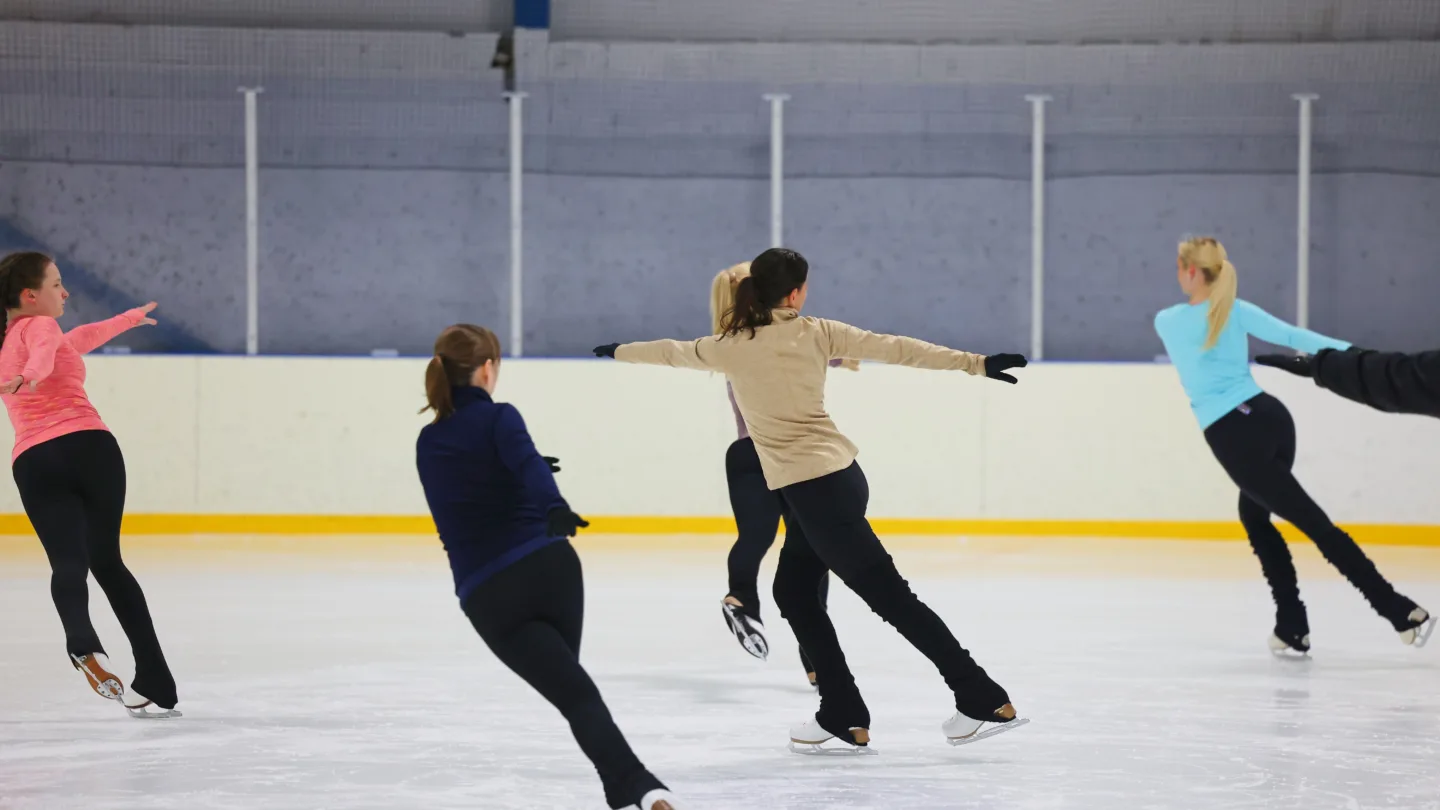 Photo: Santtu Jaakkola / Finnish Figure Skating Association.
Every athlete starts from their own local circumstances. An athlete’s daily life consists of many important elements that enable a balance between sports, recovery, and other aspects of life. For me, the most important thing has been a supportive environment that has encouraged both my daily routine and my big dreams.
Our beloved hobby was something the whole family shared
I started skating when I was barely four years old at Espoon Jäätaiturit—the same club where I went all the way from a skating school student to a medalist in major competitions. My coach, Virpi, trained me from a young age and supported me all the way to the top. She was dedicated to her profession and helped develop the club through her passion. I was able to grow through high-quality training and a club that was constantly evolving.
The Laaksolahti ice rink was a perfectly ordinary ice rink that provided functional and adequate facilities for skating practice and supplementary training. The best thing about the training facilities was that they were right nearby.
I also attended elementary school nearby, at regular public schools in Espoo. The short distances made it easy to get around on a daily basis, whether on foot or by bike. After practice, I would keep doing pirouettes at home, just for fun.
For a long time, ice skating was just a beloved hobby for me, and the best part was spending time with my friends and being part of the community. My sister and brother trained at the same rink, and my parents were actively involved as volunteers. It was something the whole family shared.
A strong home field
My identity as an athlete was solidified after elementary school, when I trained at the Mäkelänrinne Sports High School alongside other dedicated athletes. The opportunities at Märsky, combined with training at my home club in Espoo, accelerated my development. What worked for me was being able to focus on high-quality fundamental training in a familiar environment. During my senior year of high school, I won my first medal at a major championship — a bronze at the European Championships.
A harmonious daily life, along with support and understanding from my family and school, gave me a secure foundation on which I could grow — both in sports and in life in general. For young athletes in particular, the key to development lies in basic training, which should be daily, carefully planned, and consistent.
Starting when I was 14, I went to training camps abroad every summer to gain access to top-level training and a world-class training team. Home was important as a base — but it was just as important to know how top international athletes trained. My coach also continued his education on an ongoing basis.
You have to dare to trust your choices
Sports have given me almost everything, but above all, a sense of community. In the Finnish skating community, there’s a close-knit and warm bond. My skating buddies from childhood became friends for life, and today we’re each other’s bridesmaids and our children’s godparents.
As an athlete, I’ve had to learn to prioritize quality rather than trying to do everything. In elite sports, there’s a risk of falling into a performance-driven, perfectionist mindset about yourself. It’s impossible to be both a student with top grades and an elite athlete. It’s not about making compromises, but about choices you have to dare to trust.
It’s not always easy, especially when you’re young. In Finnish society, we often think that a clear academic path is safer and easier than a career in sports. But if sports are your dream, you have to be brave enough to make the decisions needed to get there.
It is essential that an athlete aiming for the top be able to study in a flexible manner, so that training and recovery take priority in their daily life. I myself was able to study with support from the sports academy at Märsky and later at the Aalto University School of Business. Otherwise, I would not have been able to complete my studies alongside my athletic career.
What can I give back as an athlete?
I remember how inspiring it was as a child to train in the same ice rink as the national team skaters in my own club. They were my biggest role models even before I started watching major competitions on TV. Later, the roles were reversed, and it became important for me to serve as a role model for young skaters.
It really made me happy when the students from the skating school took to the ice after our own practice. It was amazing to see how much inspiration the children drew from meeting top local athletes in their everyday lives. What a wonderful way to spark an interest and build bridges between generations.
I feel that today I can give back to sports in various ways and in different roles. Skating has given my life meaning, and I want to continue being involved in what I love. In college, I discovered that I enjoy participating in various projects where I can put to use the strengths I’ve developed through sports.
Athletes must be able to lead a normal daily life
Above all, it is important that athletes in individual sports have a flexible daily routine and the opportunity to focus on high-quality training and recovery — these are key issues that I also intend to champion on the Olympic Committee’s board.
Young athletes, in particular, need both financial support and mentorship. It is important to create an environment where athletes can thrive. In such an environment, they have people they can confide in and the opportunity to lead a functional, smooth, and personalized daily life.
An athlete’s support network consists of a wide range of people and organizations who, each in their own way, can help the athlete achieve success and feel confident in their own path. And in this way, continue to create success stories in sports for years to come.
The sports community’s election campaign, “Kohti kunnon aikoja,” highlights the importance of physical activity, exercise, and sports ahead of the municipal and regional elections in April. The goal is to encourage decision-makers to harness the positive effects of physical activity as sources of functional ability, community, and vitality. Read more at www.liikuntavaalit.fi
#TowardABetterFuture #Candidate