

– I didn’t like my first tennis lesson at all.
Oskari Paldanius, 18, a tennis player recently selected for the Finnish Olympic Committee’s Next Generation Team Finland, has come a long way since his first tennis practice at age 7 in Porvoo.
Now, Paldanius has turned pro following a successful final year as a junior, which included Grand Slam doubles titles at the French Open and the legendary Wimbledon.
– I never thought I’d be playing in a Grand Slam final at such a young age. Grand Slams have been my dream since I was little. When I reached my first Grand Slam final, I couldn’t really process it in that moment. Then I actually won, and after that I realized, ‘Wow, I’m a Grand Slam champion’, Paldanius recalls.
Paldanius looks back on his youth with fondness — playing and having fun with friends. He first held a tennis racket at age 3 while watching his parents play. Other sports he played included soccer, basketball, floorball, track and field, and artistic gymnastics.
His first official tennis practice certainly wasn’t love at first sight, but playing with friends started to be fun, and with that, the sport opened up in a new way.
– I loved chasing the ball; I liked, and still like, chasing the ball. I also started to experience more and more positive and joyful feelings through tennis, both in practice and in competition, which really hooked me on the sport.

What is Next Generation Team Finland?
The Finnish Olympic Committee has launched the Next Generation program, aimed at elite young athletes aged 15–22.
The program aims to better identify athletes with the potential for success and help them reach the absolute top of the world. In the first phase, 21 young athletes have been selected for the program. Among them is tennis player Oskari Paldanius.
Through the program, each young person receives a personalized support package worth over 10,000 euros, which includes funding, expert guidance, products, and services. The program is implemented in collaboration with sports federations and the elite sports network.
Standing out from the crowd and first international experiences
Throughout his elite athletic career, Paldanius has emphasized the importance of his support network, starting with his family and extending to his club and other community activities.
– We had a like-minded group during our junior years, which included Linus Lagerbohm, Felix Alopaeus, and Otso Martikainen—we were a strong quartet and clearly stood out from other Finnish players at ages 13–14.
A few years later, Paldanius found himself facing a new situation in the domestic competitive landscape.
– I started to stand out from the other Finnish players as an individual when I was 16–17 years old. I realized I was good when I always advanced a little further than the others, which meant more ranking points and a higher ranking.
His first taste of international competition came in Pajulahti, where the 13-year-old Paldanius participated in an ITF tournament for players under 18.
– It was exciting, even though we were in Finland, the common language was English, and not all of my opponents were familiar to me.
In 2022, at age 15, his first international trip to an under-18 ITF tournament lay ahead. The destination was Tartu, Estonia. Five matches, five wins.
– Winning as a clear underdog felt great, and after that, things started rolling in the right direction.
Fast-forwarding a bit, the year 2023 brought no fewer than five singles and three doubles ITF tournament victories, as well as a rise to the TOP 100 in the junior world rankings.
The first step toward the Grand Slam final
The plan was to continue the same upward trend in the rankings, but the early part of 2024 proved challenging.
His ranking dropped.
During the spring, Paldanius traveled around Europe as part of an international junior team. Progress was made, and it emerged somewhat unexpectedly in May and June.
– I advanced through the qualifiers all the way to winning a high-level ITF tournament; I hadn’t even played in a tournament of that level before. Right after that, I reached the final in another tournament. My ranking rose, and suddenly I was facing my first junior Grand Slam tournament: the qualifiers at Wimbledon.
“Top-level tennis requires desire and determination”
Paldanius talks about the high demands of top-level tennis. There are many competitors, and even this young Finn’s career is still in its early stages at the lowest level of the professional tour, which currently translates to a world ranking of 1266.
– Top-level tennis requires desire and determination. It doesn’t come from your parents’ expectations; you have to want it yourself.
Ever since middle school, Paldanius has felt that he does things differently than his peers.
– I think I was even named ‘Absentee of the Year’ because I was always away on tournament trips. Even back then, my life was quite different, and it’s been the same in high school. For example, I still haven’t been to all the places on campus.
Paldanius is described as a social and approachable person. However, he has experienced the opposite feelings himself.
– Since I have less time for friends these days, I feel like I’m less social. I still consider myself social, but when I’m at home, I want to relax and be with my family.
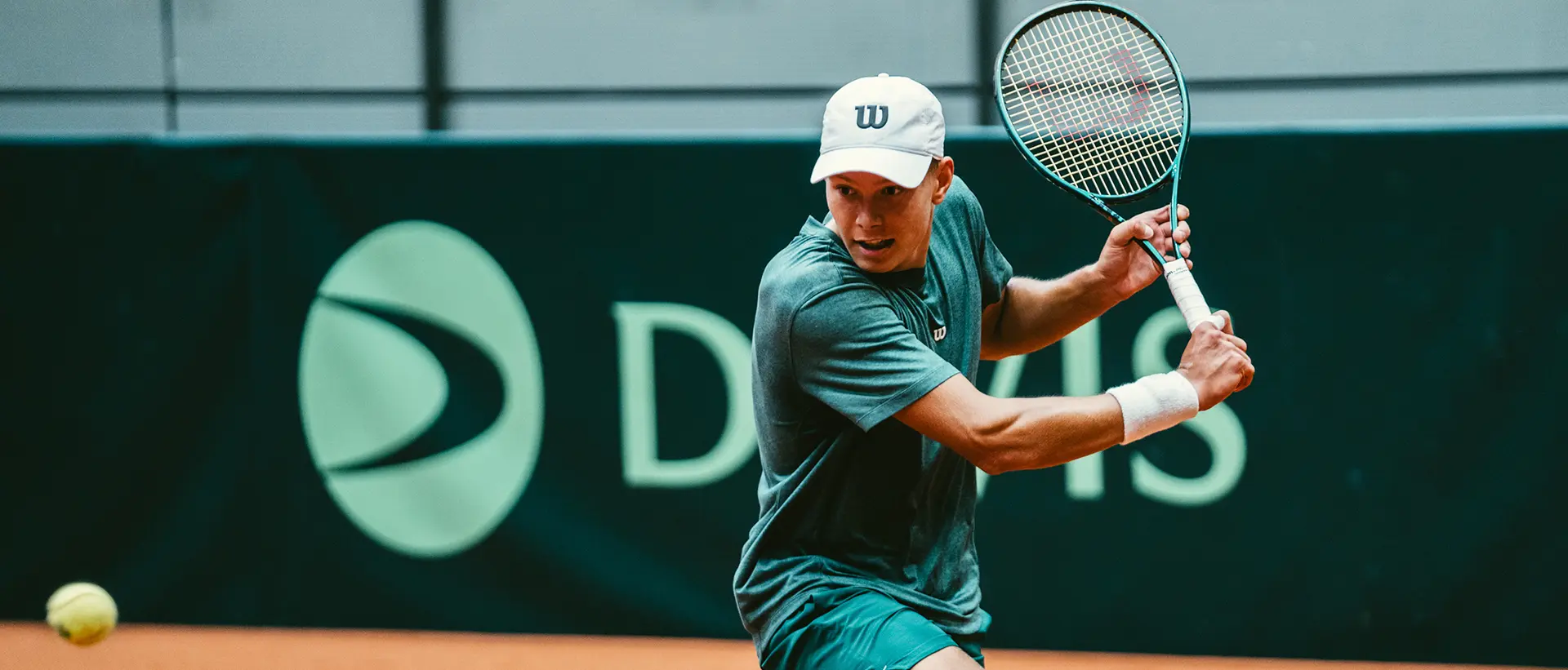
Top-level tennis requires desire and determination. It doesn’t come from your parents’ expectations; you have to want it yourself.
Reaching the top through positivity – “You can’t get that feeling of being at the top with a negative attitude”
When asked about the biggest turning point of his career so far, Paldanius doesn’t mention his unforgettable Grand Slam doubles titles at the French Open and Wimbledon.
– 2025 began at the Australian Open, where I reached the semifinals of the boys’ singles. It was an amazing trip; I played well on the other side of the world—a place I’d always wanted to go. So many things fell into place there, and after that, my confidence soared even further and my game really started to click, which also paved the way for the doubles victories.
The euphoria of the first Grand Slam final and victory still leaves Paldanius almost speechless.
– When you trust your shots completely and succeed in what you set out to do. It also manifests as a kind of flow where you dare to try something new, and with high self-confidence, that too works out.
Being in top form also involves a lot of good movement and trust in your equipment — from your shoes to your grip and racket — as well as the excitement that comes with it.
Paldanius also recognizes emotional similarities in the most meaningful moments of his career.
— Positivity, happiness, and joy both on and off the court. It’s that calm, confident, and positive feeling. You don’t get that peak performance with a negative vibe.
Building on his experiences from his junior years—both in terms of results and on an emotional level—is a good foundation for the next phase of his career.
It won’t be easy. Paldanius is well aware of this.
– The higher you go, the smaller the differences become. At the junior level, differences might arise in shots or who is more physical, but at the higher level, everyone has the basics down.
Often, the mental aspect plays a decisive role.
—Who handles pressure and emotions better in a tight situation? Everyone knows how to play in a pressure-free situation, but what about when the pressure is on?
It goes without saying that the sixth Finnish junior Grand Slam champion in history is aiming for a spot in the spotlight.
– The goal is the Los Angeles Olympics and building a professional career. All my efforts are focused on those goals. The prime of my career will likely be sometime in the early 2030s. I know that in terms of my game, I’m pretty close to the world’s best; my shots and technique are up to par. But my serve needs to be more consistent, and I need to be even tougher mentally to compete at the adult level.
Paldanius’s journey to the top is supported through the Finnish Olympic Committee’s Next Generation program. Through the program, Paldanius receives direct financial support, expert guidance, products, and services.
Featured photo: Finnish Tennis Association.