

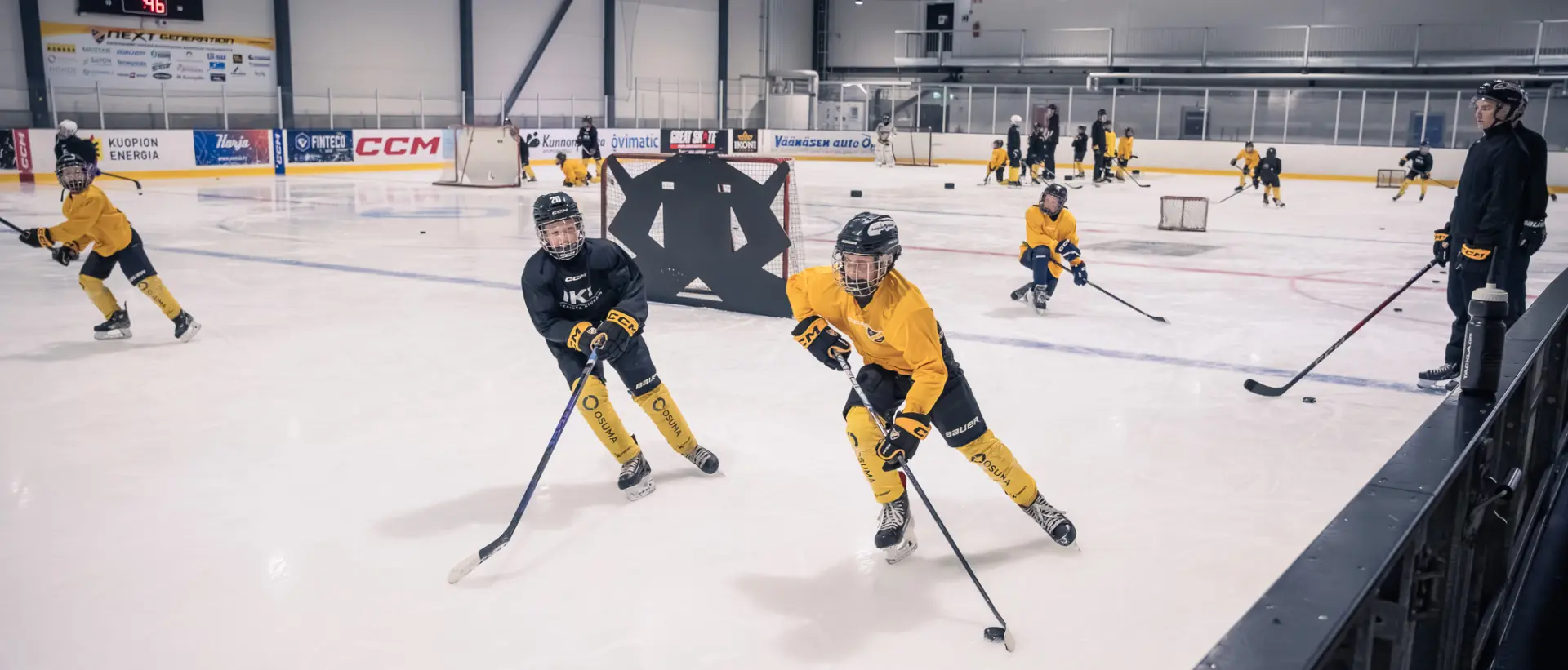
The sports operations manual developed by the Juniori-KalPa ice hockey club serves as a broad guide for the club’s activities. The handbook’s key themes are diversity, long-term development, individualized development paths, and the opportunity to participate and develop in accordance with one’s own goals.
The Junior KalPa Sports Operations Manual is based on the club’s operating practices. Although the manual itself is new, its contents have been part of the club’s daily operations for quite some time.
– The framework for children’s team sports has been in line with our activities for a long time. Above all, the framework and Suomi-kiekko’s updated player pathway helped us articulate, strengthen, and unify our operations, explains Benjamin Laurinkari, Director of Junior Sports for the KalPa community.
Particularly with regard to the Suomi-kiekko player development pathway and the framework for children’s sports, the points of convergence with the club handbook have been clear: the goal is to improve the quality of sports both on the ice and in off-ice environments. Attention has been focused, among other things, on increasing children’s active time, as well as the volume and variety of training.
According to Laurinkari, it is also important to observe whether the children are enjoying themselves in the group.
– This framework has reinforced our belief that success in children’s sports cannot be measured by wins or league standings. We want to monitor whether the children enjoy the activities, feel safe, stay committed to their sport, and feel that they are improving. With the handbook, these goals have been made more visible than before, he sums up.
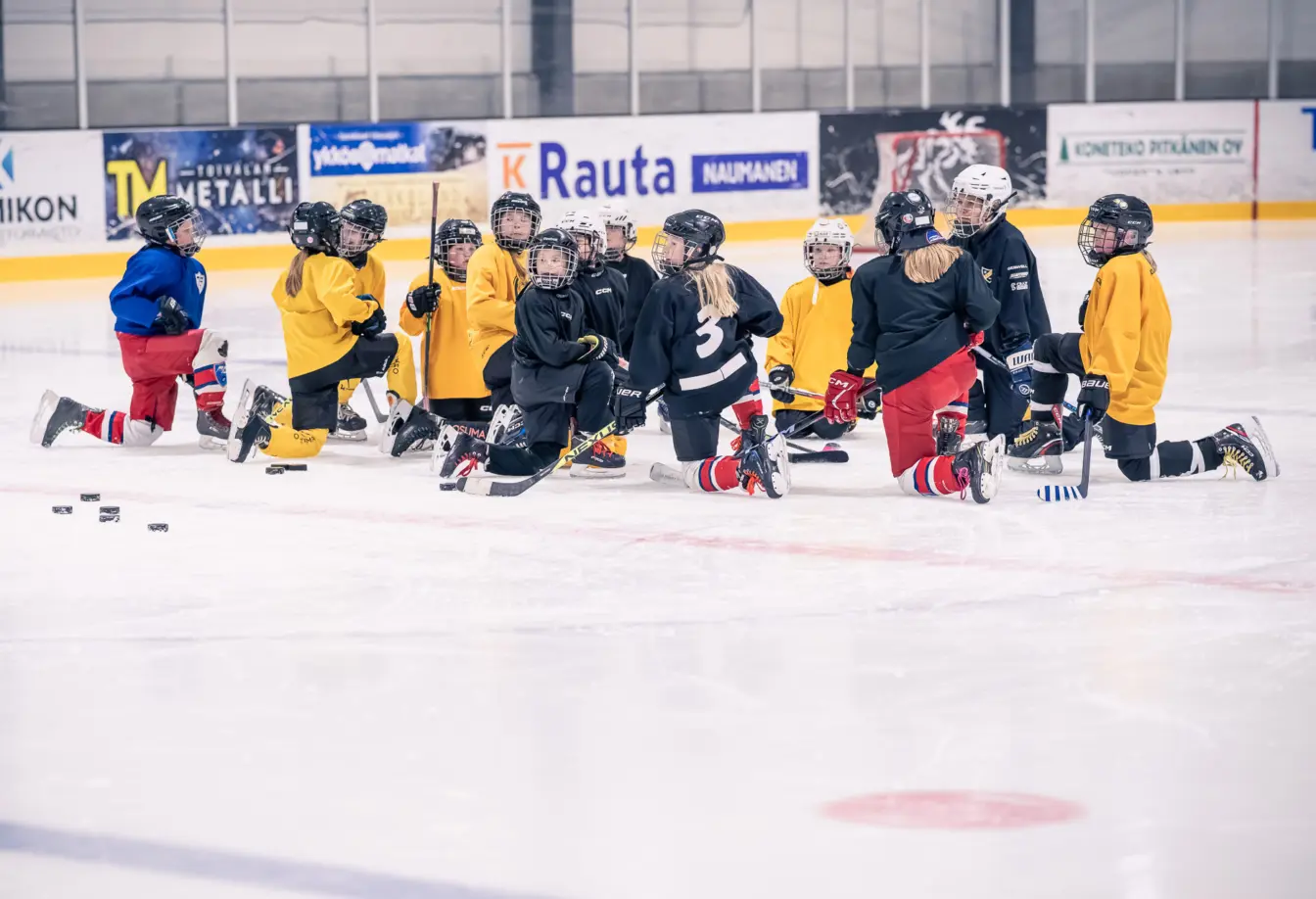
Juniori-KalPa closely monitors its activities
Juniori-KalPa closely monitors various aspects of its operations, including the number of participants, participant retention, safety, the overall experience of development, satisfaction, and athletic progress.
The club has also introduced a training monitoring tool (the Finnish Ice Hockey Association’s Hockey Centre), which is primarily designed to support the development of coaches. The tool helps coaches evaluate their performance after practice and reflect on whether the practice objectives were met, how active the players were, how much decision-making and game-like play the session included, and what could be done better next time.
According to Olli Savikko, the Finnish Ice Hockey Association’s junior director, Juniori-KalPa has done an excellent job of adopting the framework for children’s sports as well as the core principles of the Suomi-Kiekko player development pathway.
– The goal of the framework for children’s team sports and the Suomi-Kiekko player development pathway is to improve the quality of play on the ice and to promote high-quality daily practices across various settings. These aspects are evident in practice when there is a clear goal, the children work extensively with the equipment, and there is plenty of game play during practice. A high-quality daily routine is made possible by open and genuine interaction, where children are involved in training and are treated and recognized as individuals within the team environment. At Juniori-KalPa, activities have been adapted to the club’s structures in accordance with the sports activities handbook. In this way, the measures are also implemented from the guidelines into the children’s sports activities.
The club regularly collects feedback from children about its activities
The Sports Activities Handbook has also established a process for collecting feedback from children. Feedback is collected regularly from hockey players aged 11 and older.
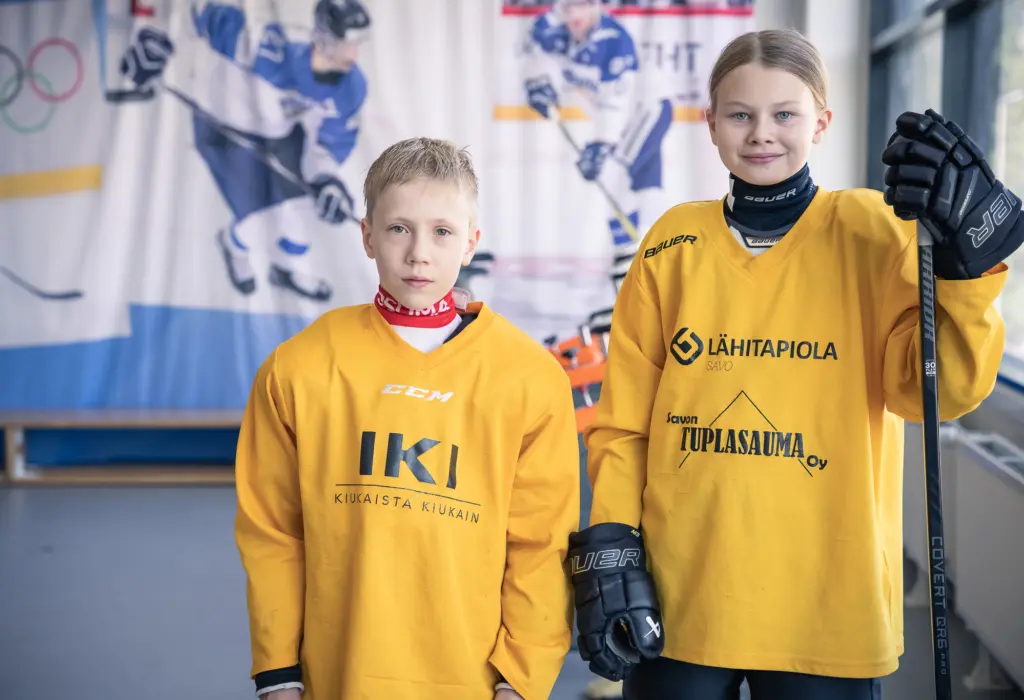
Martta Kokkonen and Otto Uimonen, both 11 years old and participants in Juniori-KalPa’s 2026 summer hockey camp, believe it is important to gather feedback.
– It’s nice that we’re collecting feedback. I’ve also given feedback on a few things myself. Not a lot, but a little. If there’s one thing that could be improved, it would probably be team spirit. We should do more things as a whole team rather than in small groups, Martta explains.
– It’s nice to have a say. For example, I’ve shared my wishes regarding the end-of-season games. It would also be nice if there were more events throughout the year. They usually draw a big crowd, and you get to play with your friends, adds Otto.
Both hockey players love that, above all, practice gives them a chance to work up a sweat and play with their friends.
– A good practice session makes you sweat and gives you a chance to work on your skills. I’d definitely like to learn more about puck handling and good skating, Otto says.
– A good practice session is varied and intense. I’d like to improve my shooting and my skating in general, says Martta.
Teemu Koljonen, head coach of Juniori-KalPa’s U13–U10 age groups, believes it is important to involve the children and listen to their input. The club uses the Hockey Centre system to gather children’s feedback and conducts a sentiment survey through this platform.
– It takes about a minute for the kids to complete the survey. The survey is sent out automatically once a month, so it doesn’t create any extra work for coaches, for example. The responses show an average score for things like whether practice was fun or whether the team has good team spirit.
– Through the survey, we found, among other things, that the children weren’t receiving enough feedback in their daily lives. We made this an area for improvement and changed our approach to giving feedback. We want to teach children to discuss things and give feedback. When children feel safe and heard in the group, it’s also easier for them to be on the ice, Koljonen summarizes.
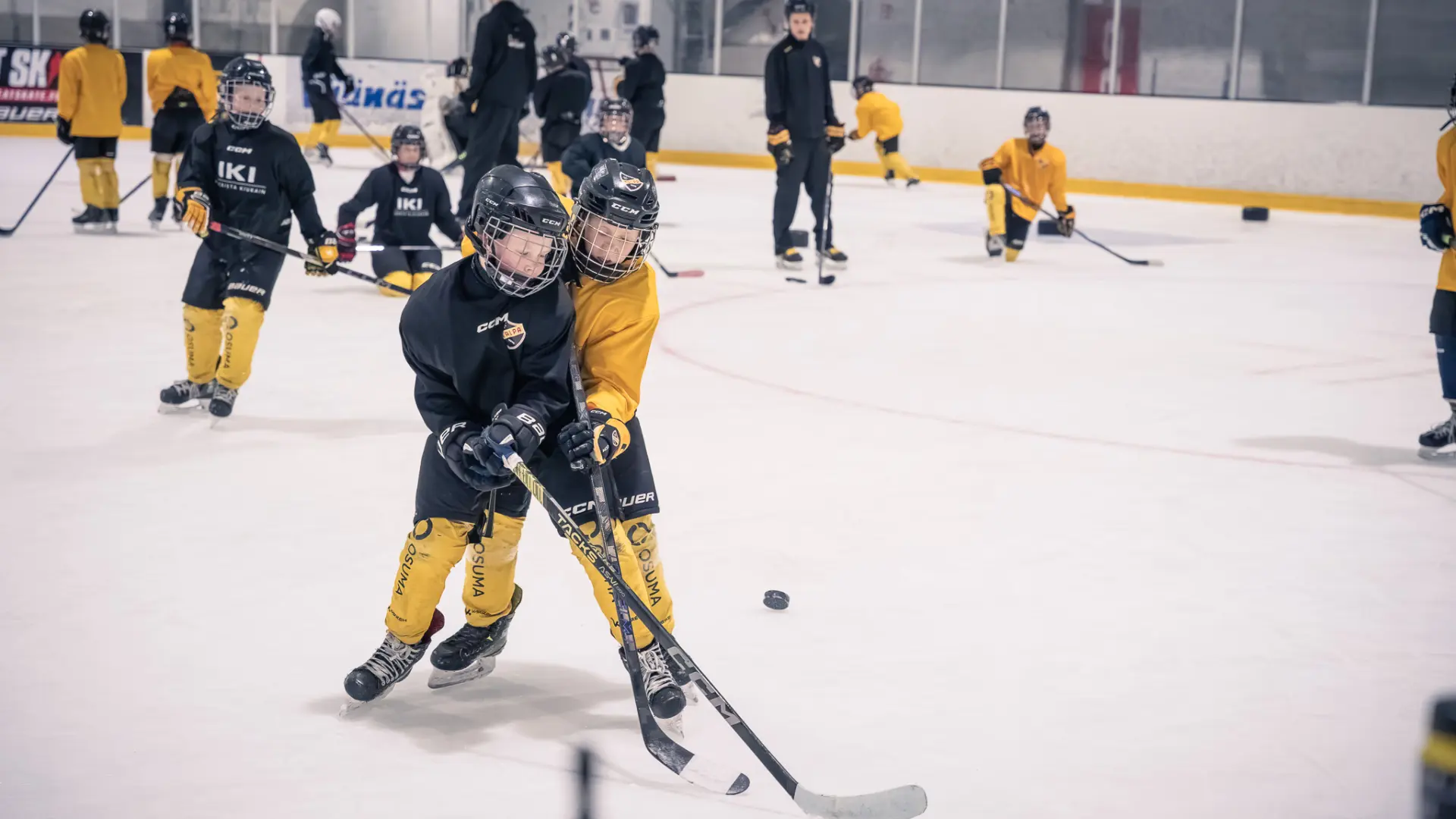
It’s nice to have a say. For example, I’ve shared my wishes regarding the final races.
Clear goals make day-to-day club life easier
Both Laurinkari and Koljonen feel that the sports operations manual developed by the club has provided guidance in many areas.
– Everyday life is so much clearer now. We have a clear direction and know what we’re aiming for. There’s no longer any guesswork about what we should be doing, Koljonen explains.
– The Sports Activities Handbook has made the goals and metrics more visible to both coaches and club staff. From an overall perspective, the direction is clearer now that we have a framework that guides the work of both our club staff and coaches. The handbook supports the quality of our operations, adds Laurinkari.
Text translated with the help of AI.
The Olympic Committee and sports federations are taking a new approach to children’s sports
Right now, sports for Finnish children are at a turning point. Fewer and fewer children are getting enough exercise, too many are quitting sports too early, and basic physical skills have declined as daily physical activity has decreased. Children are getting involved in organized sports at an increasingly younger age, they are choosing their sports earlier, and, unfortunately, they are also leaving club activities too early.
In light of the research data, none of these trends bodes well for adopting an active lifestyle, learning physical skills, or building a career in elite sports.
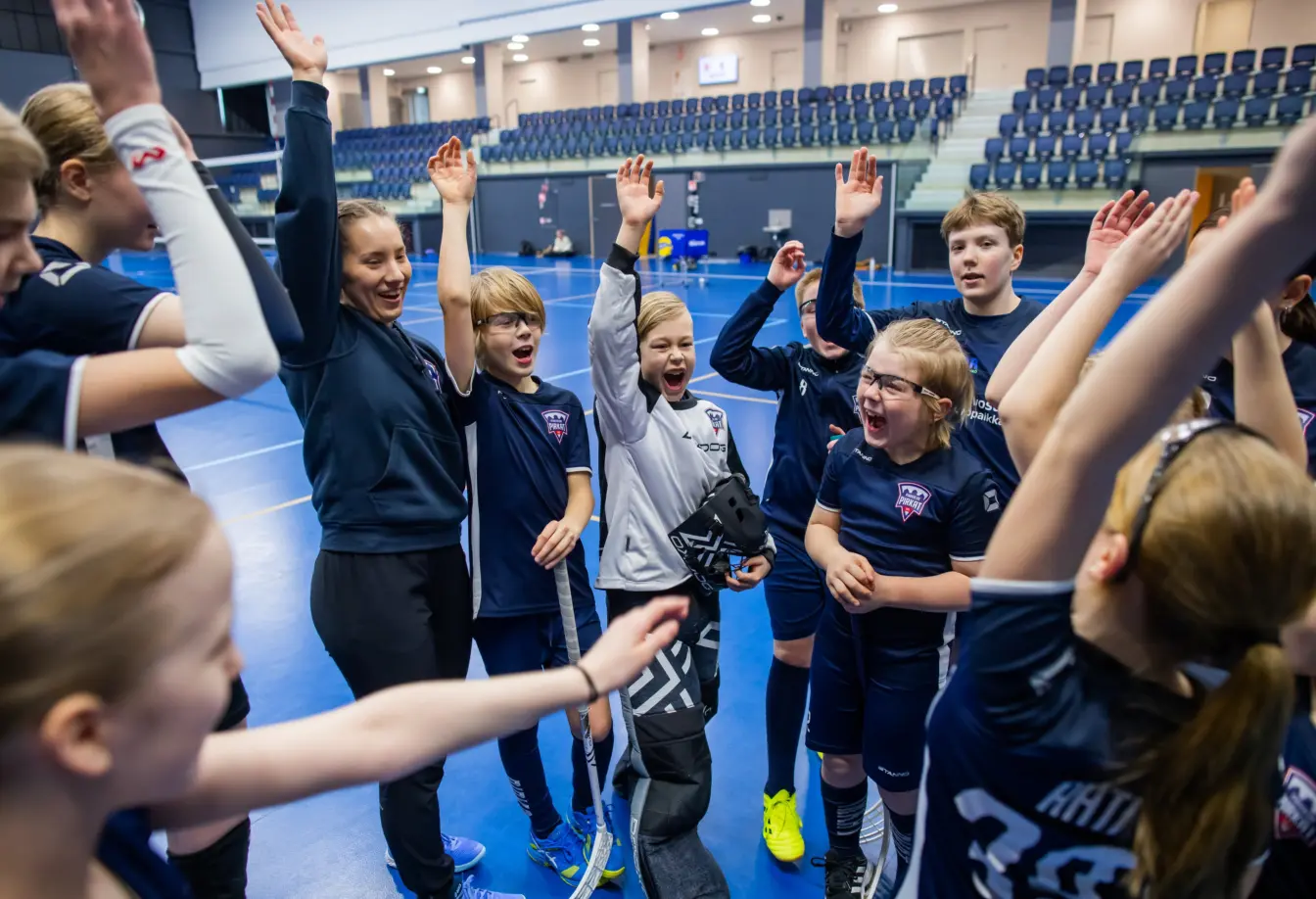
The Olympic Committee and 40 sports federations are seeking a new direction for children’s sports. We want to strengthen the future of children’s sports in Finland. The sports community is doing everything it can to ensure that every Finnish child can continue to discover the joy of sports. All children should have the opportunity to participate, belong, dream, and engage in sports in their own way.