

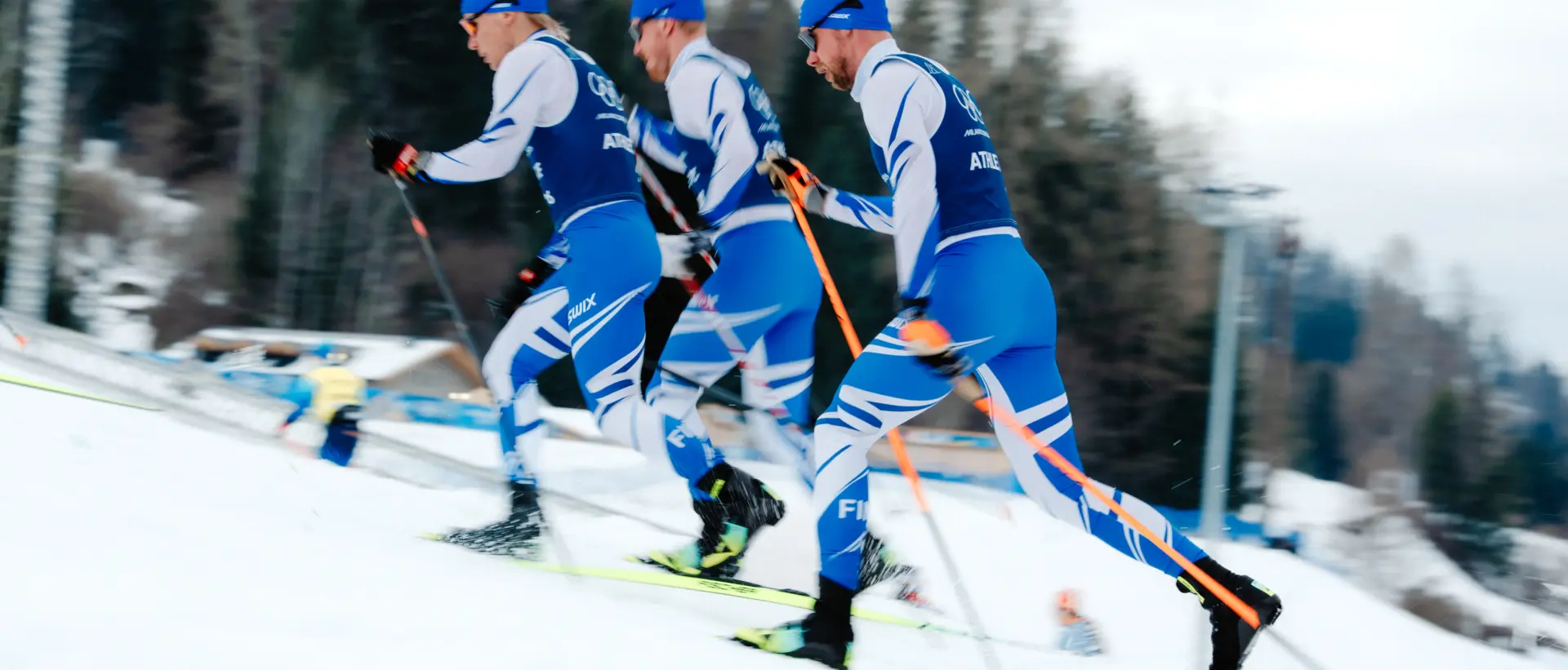
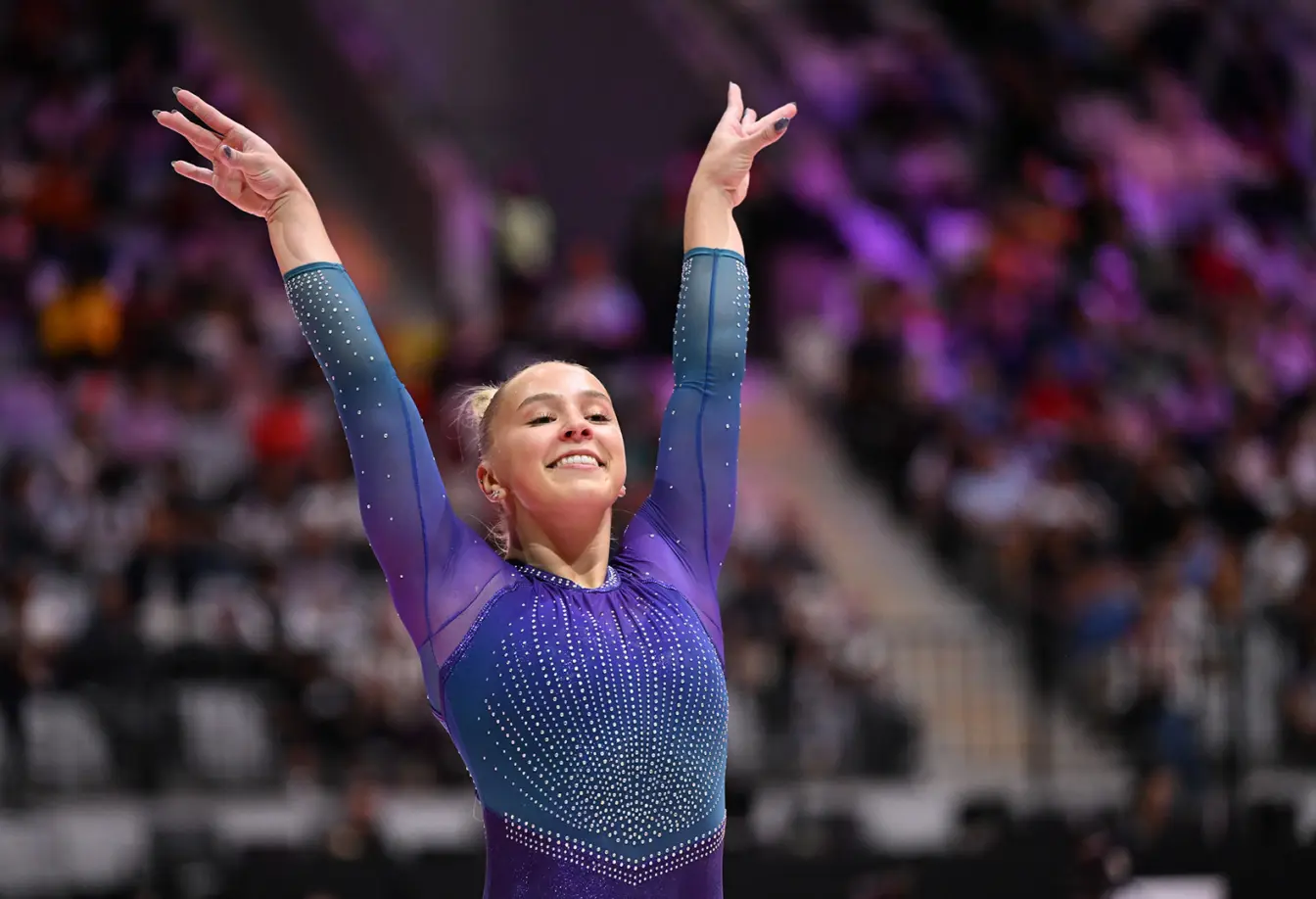
World-class athletes were in Helsinki in January, when the British national artistic gymnastics team, one of the best in the world, held an eight-day training camp at Urhea. At the same time, Finnish coaches had the opportunity to exchange ideas and build international networks.
– In January, we hosted the British national artistic gymnastics team at our training camp; they’re one of the best national teams in the world. Our coach spent eight days with the British coach. It’s a completely different experience to go abroad yourself and benchmark against others when you know the people personally, says Simo Tarvonen, CEO of the Helsinki Olympic Training Center.
So there’s no need to always go out into the world to seek international expertise; the world can also come to us. Olympic training centers help ensure that Finnish expertise remains internationally competitive in the long term.
Expertise in two ways
The Finnish sports system has two different Olympic training centers, both of which share the same goal: to expand and strengthen expertise in high-performance sports. At Urhea in Helsinki, the focus is on sharing expertise among people, while Vuokatti is distinguished by the close integration of scientific research, technology, and coaching.
– It would be easy to say that Olympic training centers are simply places to train, but their true added value lies in the interactions between experts. They are places where people come together and where expertise can grow, says Janne Hänninen, director of the Olympic Committee’s high-performance sports unit.
At Urhea, a conscious effort is made to foster the coaching community. Coaches and experts from different sports meet in their daily work, both informally and in scheduled settings. The community believes in the power of interaction.
– We want to encourage coaches from different sports to talk to one another, even if they have nothing in common other than the fact that they’re both involved in high-performance sports. There always seems to be something to talk about, and peer support on coaching-related issues, for example, is worth its weight in gold, Tarvonen says.
Resources for high-performance sports to be focused on the very top going forward
Finland cannot compete internationally in sport through financial resources or population size. That is why high-performance sport in Finland must find their competitive edge elsewhere. The Olympic training centers believe that the solution lies in expertise.
Traditionally, resources for high-performance sports have been distributed as widely as possible, resulting in support that has been sufficient for many, but not necessarily enough for anyone. Under the new strategy, resources will be directed toward those athletes and sports that have the best prospects for success. Olympic training centers will focus on working with this elite group.
According to Janne Vuorinen, director of the Vuokatti-Ruka Olympic Training Center, the change in strategy does not mean that the training center can neglect its broader base.
– Even though we’ll be focusing more on the elite level in Finland going forward, it’s also really important that expertise trickles down. For example, everyone here works in the same facilities, which allows knowledge and expertise to be passed on. In our day-to-day work with high-performance athletes in the selection phase, we follow the same principles as we do in high-performance sports.
Olli Ohtonen, Professor of Practice in Snow Sports at the University of Jyväskylä, adds that collaboration between high-performance sports and the academic level is often very close, and gives a concrete example.
– The shooting test developed for biathlon is a good example of an application that is used continuously in daily training within the academy setting. In Vuokatti, biathletes of academy age regularly practice shooting using that system. Of course, it was developed for the needs of high-performance sports, but the largest user group consists of high school students as they practice their shooting skills.
At the heart of R&D in sports
A distinctive feature of Vuokatti-Ruka is its long-standing connection to research and technological development at the University of Jyväskylä. This model is described by the concept “From Science to Practice”: the university provides the research and scientific perspective, and the Olympic training center helps put it into practice.
R&D activities aim to identify areas for development that benefit multiple sports. In Vuokatti, there has long been natural collaboration among snow sports, as their needs are similar. For example, expertise related to maintenance and equipment is shared among cross-country skiing, biathlon, and Nordic combined. A recently completed ski maintenance development project focused specifically on these so-called “small-ski” disciplines.
– The project really addressed the specific need to improve ski base grinding. Collaboration across disciplines is a major competitive advantage, even from an international perspective, Ohtonen says.
International standards must be viewed up close
The concept of “international standards” is often mentioned in discussions about high-performance sports. According to Hänninen, it is first and foremost about understanding what it takes to reach the top of the world, being able to compare one’s own performance to that standard, and evaluating it honestly. Where does a Finnish athlete stand in relation to the world’s best? Are their performance levels, physical attributes, technical and tactical skills, and the quality of their training and coaching sufficient for international success?
– Everyone involved in sports should have a mindset focused on striving for excellence, including us in our puffer jackets. Every day, we need to have passion and curiosity about our work, and we need to ask ourselves how we can be better, Hänninen says.
Tarvonen agrees and says he thinks about the issue every day.
– In the morning, when I come to work and see a high-performance athlete training, I think to myself that he’s aiming for the World Championships and is ready to give it his all. At that moment, I always ask myself: Am I ready to give just as much in my own work today?
Expertise benefits the entire system
Olympic training centers are part of the Finnish sports academy system, which all interviewees consider to be one of our strengths. The opportunity for 20,000 young athletes to pursue dual careers provides a solid foundation from which athletes can rise to the elite level.
– This also highlights the role of Olympic training centers as part of a broader sports academy system. The centers focus on the elite level, but the connection to younger athletes and coaches is maintained through the academies, says Hänninen.
The expertise generated by Olympic training centers must be implemented nationwide so that the entire sports community can benefit. The system must establish mechanisms that enable this knowledge to be transformed into expertise in Finnish coaching.
– Olympic training centers must strengthen elite sports in Finland as a wholeand foster a collaborative atmosphere in which an athlete’s home club and local sports academy feel that the athlete’s success belongs to them as well. Successes are shared, and this creates a sense that we are all needed on an athlete’s journey from youth sports to the top of the world. Then we’ll be in a situation where we’re all striving to be better by lifting each other up,” says Tarvonen.
– Olympic training centers are organizations that also produce new talent for high-performance sports through educational institutions involved in the field. Through them, sports and high-performance sports will hopefully become an even more attractive field to work in, adds Vuorinen.
Two different centers reinforce the same system
Olympic training centers do the same work in different ways. In Helsinki, the focus is on people and cross-sport learning; in Vuokatti, it is on combining research, technology, and coaching.
In both cases, however, the goal is the same: to develop the skills that will enable Finnish athletes to be the best in the world.
Ultimately, the question is how well Finnish sports can pool their expertise, create something new, and use that to build an international competitive advantage.
The Olympic Committee and the Olympic Training Centers have agreed to collaborate through 2030
The Finnish sports system has two different Olympic training centers, both of which share the same goal: to increase and strengthen expertise in high-performance sports. At Urhea in Helsinki, the focus is on sharing expertise among people, while Vuokatti is distinguished by the close integration of scientific research, technology, and coaching.
- The Helsinki Olympic Training Center’s cooperation agreement reinforces the center’s national role in the day-to-day operations and development of high-performance sports. The parties to the agreement are the Finnish Olympic Committee, the Finnish Paralympic Committee, the City of Helsinki, and the Urhea Foundation.
- The Vuokatti-Ruka Olympic Training Center partnership brings the contracting parties together to develop Finnish high-performance snow sports by combining research, expert knowledge, and coaching. The parties to the agreement are the Finnish Olympic Committee, the municipality of Sotkamo, the city of Kuusamo, the Finnish Biathlon Association, the Finnish Ski Association, Ski Sport Finland ry, the Finnish Snowboard Association, the Faculty of Sport Sciences at the University of Jyväskylä, the Vuokatti Foundation (Vuokatti Sport), the Institute for High-Performance Sports (KIHU), and Rukakeskus Oy.
Read more
Olympic Training Center Helsinki Press Release, June 23, 2026: New Agreement Strengthens the Olympic Training Center Helsinki’s Role in Finnish high-performance sports
Vuokatti-Ruka Olympic Training Center Press Release, August 13, 2026: Finland’s high-performance winter sports athletes join forces – The Vuokatti-Ruka Olympic Training Center launches a new era of collaboration toward the 2030 Winter Olympics – Vuokatti-Ruka Sports Academy (August 13, 2026)
Photos: Jesse Väänänen and Filippo Tomasi/Finnish Gymnastics Federation.