

Success is built on learning
Expertise in coaching and leadership – at the heart of the Olympic Committee’s new strategy
In elite sports, the goal is clear: to compete and win. It is precisely this hunger for success that has always driven Finnish athletes forward and shaped our country’s sporting identity. But what if future successes are increasingly based on a hunger for learning? The Olympic Committee’s new strategy highlights another equally important goal alongside the pursuit of success: the holistic development of the individual. These goals do not conflict with one another—quite the opposite.
The primary goal in elite sports is clear: to compete and win. To be the best. And we got to experience that success once again with our victory at the Ice Hockey World Championship.
The hunger for success is the main driving force in Finnish sports. But what if that driving force were instead a hunger for learning—would we then have significantly more winners?
The world of elite international sports is changing rapidly. At the same time, attitudes are also shifting regarding the type of training that helps athletes develop into the best versions of themselves—not only as athletes, but also as people. Although excellent work is being done in Finnish sports, our international success currently does not reach the same level as in the other Nordic countries. That is why we need to change the way we think about sports, training, and learning.
The Olympic Committee’s new strategy highlights another goal alongside the pursuit of success: supporting the holistic development of the individual. This does not diminish the competitive spirit or the goal of winning. On the contrary. In the elite sports of the future, success will increasingly be based on the athlete’s ability to learn, think, collaborate, and grow as a person. At the same time, this goal has a societal dimension: whereas the societal significance of sports was previously justified by promoting an active lifestyle, the goal of holistic human development is to view sports’ potential to influence human development from a much broader perspective.
A coach is always also a mentor
Sports provide a unique environment for personal development. When well-led and well-coached, sports can boost motivation, learning ability, teamwork skills, and a sense of responsibility—skills that are essential both in sports and in life.
A coach is always also a mentor, whether he likes it or not. That is why coaching can have either a positive or a negative impact on an athlete.
At its best, sports nurture individuals who can strive to reach their full potential, collaborate with others, and take care of their own well-being. By providing high-quality guidance to children and young people in their development, the Finnish sports community simultaneously creates a strong foundation for an active lifestyle and for elite sports.
The Olympic Committee’s new strategy aims to create a new dynamic in Finnish sports: international success and the social impact of sports—supporting the holistic development of children and young people. These two goals reinforce each other at every stage of an athlete’s career.
The Swedish Basketball Federation’s slogan, “A mature person is a mature player,” aptly describes the future direction of elite sports. The path to the top increasingly requires athletes to grow as people: to think independently, have the ability to learn, collaborate, and even cope with difficulties.
The next step in the development of Finnish sports
The Olympic Committee’s strategy is a collaborative strategy. It provides stakeholders in Finnish sports with shared goals, a common direction, and a framework for cooperation. At the same time, it also defines the Olympic Committee’s role as a facilitator of collaboration and a leader.
“The prevailing organizational culture eats strategy for breakfast,” as the saying goes. The most important change does not take place in the strategy or the organizations. It must be evident in the athlete’s daily life and in the quality of the sport. That is why the strategy must be used to influence the organizational culture.
How can we improve sports within our key areas of operation—in clubs, national teams, academies, and training centers? How can we better highlight the skills involved in athletes’ daily training, interactions, and leadership?
That is why developing expertise in training and leadership is one of the key priorities of the Olympic Committee’s strategy. The quality of training has a significant impact on the quality of Finnish sports.
Finland has many talented individual coaches and leaders. However, from a broader perspective, expertise in coaching and leadership remains one of the biggest bottlenecks in Finnish sports. This expertise is not being effectively transferred to athletes’ daily lives and training environments.
The strength of Finnish sports has traditionally been built on solid expertise in the natural sciences—specifically in physiology, biomechanics, and exercise science. These fields will remain essential in the future as well. Organizations such as KIHU (the Institute for Elite Sports) are doing valuable work in this area, and sports federations must continue to nurture and develop the specialized expertise required in their respective sports.
In the future, however, that will no longer be enough.
The competitive advantage of the future is based on an understanding of people
In the Olympic Committee’s strategy, the development of coaching and leadership skills primarily involves a behavioral science perspective—that is, our ability to better interact with people: to coach, lead, and support their holistic development.
Let’s talk about metacognitive skills: learning how to learn, building motivation, self-awareness, the ability to reflect, and the ability to collaborate. These are skills that every coach and sports leader needs.
A study on the world’s best coaches (Learning from Serial Winning Coaches, Mallett & Lara-Bercial 2024) shows that it is precisely in these skills that the gap between the good and the very best is widening. In the elite sports of the future, it is not only crucial how much we understand about the physiology of training or how high we set the bar. It is also crucial how well we can strengthen people’s motivation, learning ability, self-confidence, and ability to collaborate.
Finnish sports require pedagogical, psychological, and interpersonal skills. We can even speak of a shift in the culture of training and coaching, which is best described by examining the athlete’s role: in the future, the athlete will no longer be a passive object in training—that is, something that is developed—but rather the athlete will be the agent, an active thinker, practitioner, and learner.
Center of Excellence for the Development of Coaching and Leadership Skills
The stakeholders in the Finnish Sports Competence Network have established three common goals for the development of training and leadership culture.
- A goal-oriented organizational culture where enthusiasm is fueled by goals, learning, development, and success.
- A people-centered organizational culture that promotes holistic development, learning, and well-being.
- A community-oriented organizational culture where learning is continuous and takes place collaboratively.
Behind these goals lies a new perspective on people and learning. Cutting-edge expertise no longer arises solely from individual achievements or isolated educational programs, but from the ability to continuously learn together.
Finland could become the world’s best nation for learning. But we aren’t there yet.
One of the main reasons is that Finland lacks a comprehensive system for the professional development of coaches and sports leaders. We have many excellent individual training providers, one of which could be given overall responsibility for the development of skills in coaching and leadership. A network-based approach alone does not sufficiently promote professional development.
Who is systematically working to develop future expertise in coaching and leadership in Finland? Who systematically monitors domestic and international developments and research in the field and is responsible for ensuring that new expertise is disseminated to educational institutions and sports organizations? Who is developing the long-term structure for skills development and drafting a reference framework for the Finnish education system? Who is transforming the ideas generated through networking into practical tools? Who is refining the competency goals for training and leadership?
The above are just a few of the questions we need answers to if we want to elevate Finnish expertise in training and leadership to the world’s highest level. Finnish sports need a new center for coaching and leadership expertise—a place where development work is carried out daily in a planned and long-term manner.
Finnish sports are built on strong communities – clubs as centers of learning
Finland is known as a society that values education, including in the field of sports. When it comes to professional development, there has been a heavy reliance on formal education, even though research shows that most learning takes place in the course of daily work. In sports, every training session, coaching situation, meeting, and interaction should also be viewed as a learning opportunity for the coach and leader.
The key, therefore, is how successfully we can integrate new methods for continuous and collaborative learning—reflection, mentoring, peer learning, and collaborative development—into the most important settings in sports: clubs, academies, and training centers.
In addition to a national center of excellence, we need new solutions at the regional and local levels. Sports clubs play a special role, as they are the driving force behind the vitality of Finnish sports. Competence development should take place even more in the everyday setting. In this work, clubs and smaller sports federations need support. Finland has a network of sports colleges that is exceptional even by international standards, and whose potential can be utilized to a much greater extent than today to develop regional and local training and leadership expertise in collaboration with clubs, sports federations, academies, and regional sports organizations.
Bringing educational organizations closer to sports clubs is the best way to develop expertise. At the same time, clubs can serve as training centers for coaches and leaders as well. Finnish sports are built on strong communities.
The purpose of sports is not merely to achieve results. What matters most is the kind of people we nurture through sports and the culture we foster within Finnish sports. The purpose of sports is to nurture people who dare to strive for their best—both in sports and in life.
Therefore, the goals of success and development are not at odds with one another. On the contrary, they reinforce one another.
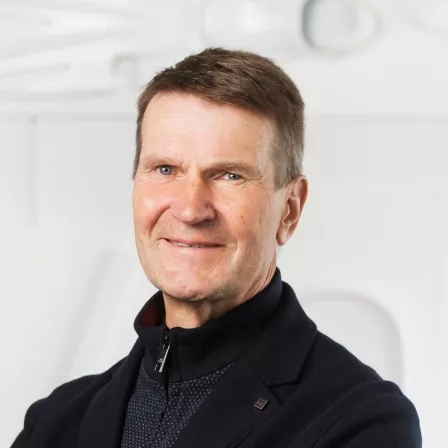
Erkka Westerlund, Master of Sport Sciences, is a distinguished Finnish ice hockey coach, wellbeing coach, sports leader and speaker. As head coach of Finland’s men’s national ice hockey team, Westerlund won Olympic silver and bronze medals as well as two World Championship silver medals and one bronze medal.
Erkka Westerlund is a member of the Board of the Finnish Olympic Committee.