

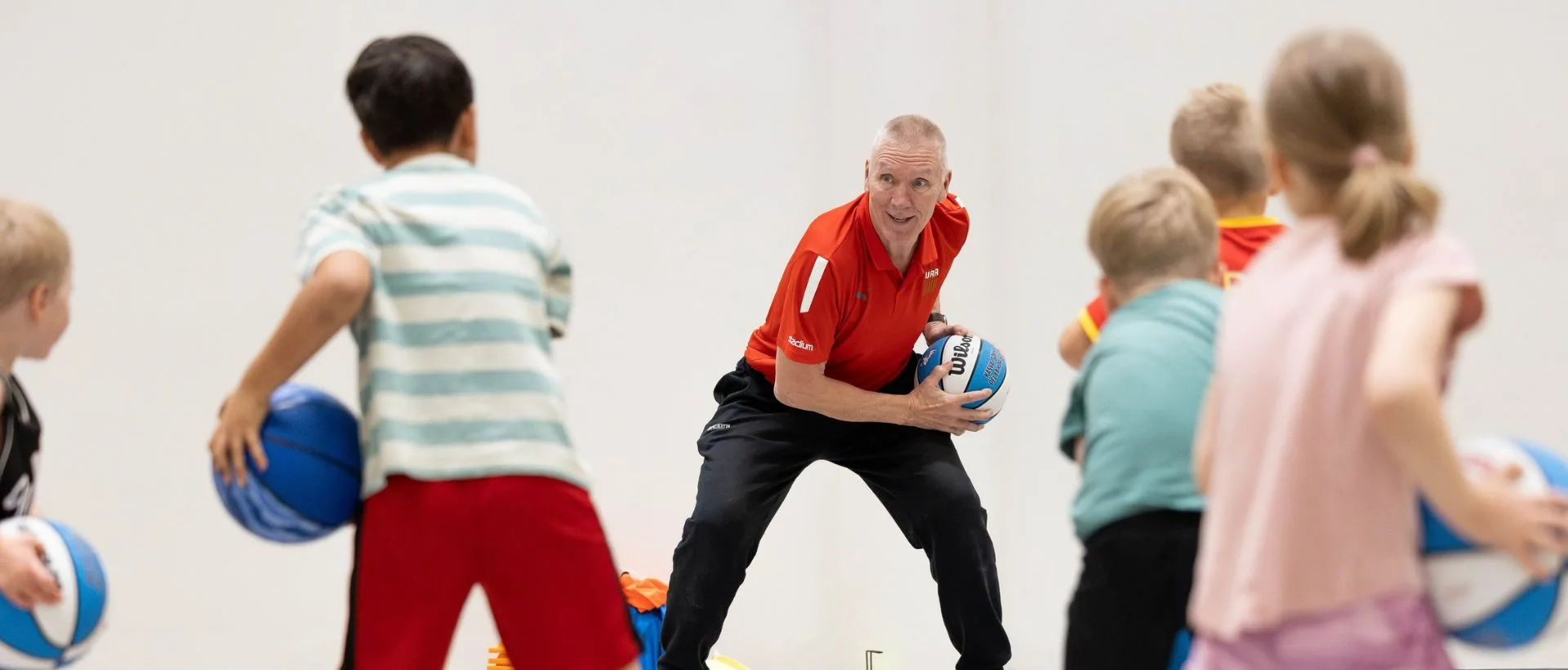
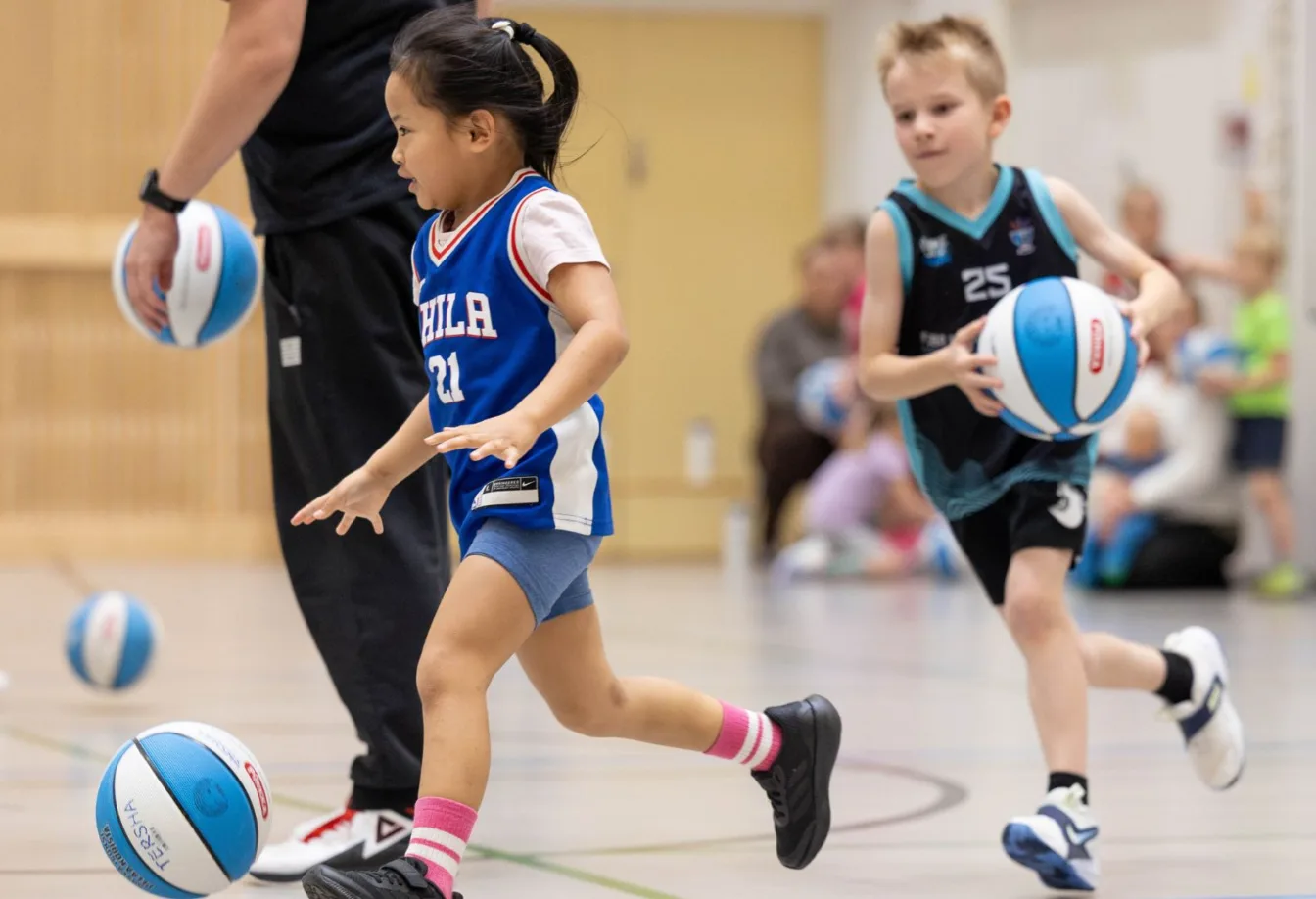
When a child first starts playing sports, the most important thing isn’t how many baskets they score or how quickly they develop their skills. What matters most is the feeling the practice sessions leave behind. Jukka Lindberg, a mini-basketball coach at Ura Basket, knows that a good first coach can spark an interest in physical activity and keep a child coming back to the sport time and time again.
– When a child arrives for their first basketball practice, they often bring with them enthusiasm, curiosity, and perhaps a little nervousness. They don’t yet know if basketball will become a hobby they’ll stick with for years. Instead, they quickly notice how they’re welcomed, whether they can make friends in the group, and if practice is fun, says Jukka Lindberg, a mini-basketball coach at Ura Basket.
It is in moments like these that the importance of a child’s first coach becomes especially clear, and Jukka Lindberg knows what he’s talking about. A longtime basketball coach, he began his coaching career back in 1980. His playing career had ended by then, but basketball remained a part of his life in a new role. Coaching children felt like the right fit, and he realized he wanted to pass on what he himself had gained from the sport.
– Children’s energy and joy in physical activity are contagious. When the children get excited, it inspires the coach, too. I often come away from practice feeling energised and as though I’ve gained a lot myself, Lindberg explains.
Many roles in coaching
Jukka Lindberg, who coaches at Ura Basket in Kaarina, has served as the club’s head of coaching, contributed to the development of coaching programs, and served on the club’s board as the person in charge of coaching. Over the decades, he has coached players of all ages, and for the past ten years, his work has focused on the youngest basketball players. In addition to his coaching work, he also supports and mentors other coaches working with children.
– As a coach, I’ve worked with athletes at every age level, from children all the way up to the national youth team and the adult division-level representative team. I personally believe it’s important for a children’s coach to see the entire coaching continuum. That’s when you come to understand the value and significance of coaching young children, says Lindberg, who spent his working career as a primary school teacher.
– I’ve been the mini-basketball coordinator for six years now, and I’m currently coaching 5-year-olds in the Pikkusudet team. At the same time, I also serve as a mentor to other coaches of young children. As a mentor, I’m present at practices and help coaches carry out their duties and develop their coaching skills. Providing hands-on support to coaches during practice has proven very effective.
Early experiences can determine whether a child continues with their hobby
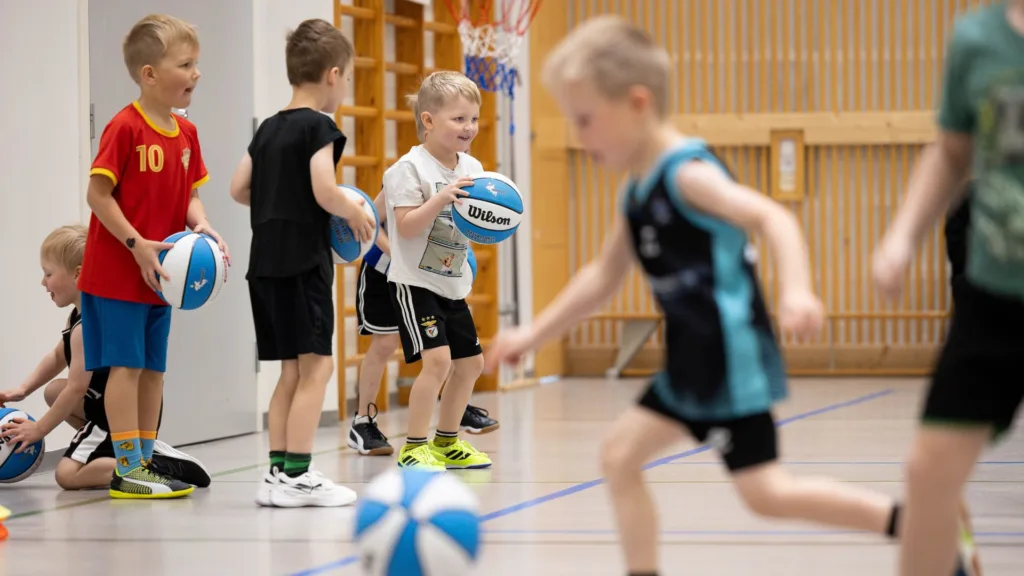
In practices for young children, they learn many other skills in addition to ball handling and shooting. Learning to function in a group, being considerate of others, and following shared rules require practice just as much as the sport-specific skills themselves.
– A coach’s job is to create an environment where a child feels safe to try new things, make mistakes, and succeed. You can’t expect everyone to have the same skills or the same level of concentration. Children develop at different paces, and there should be appropriately challenging activities for everyone, says Lindberg.
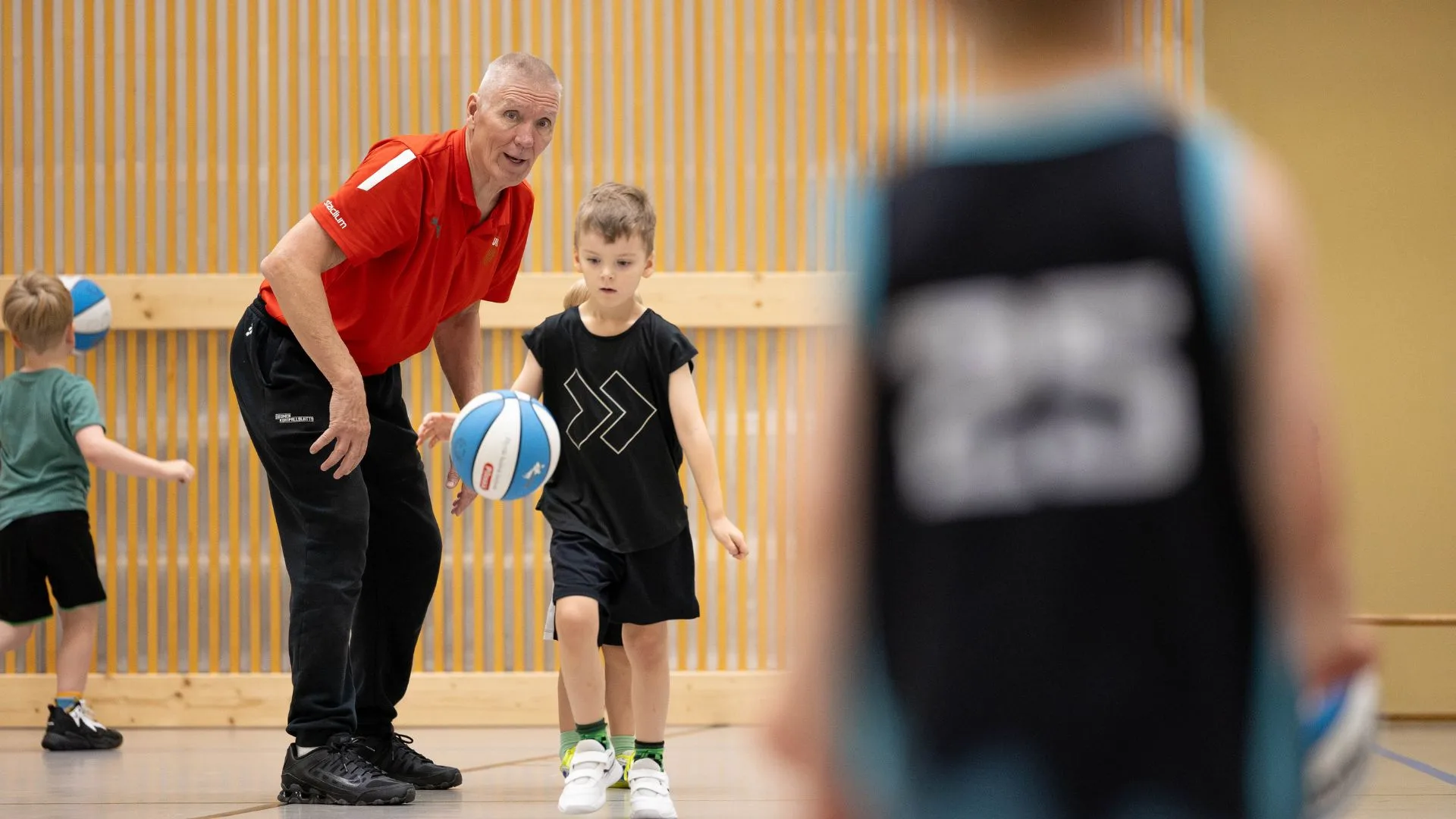
A coach’s job is to create an environment where a child feels safe to try new things, make mistakes, and succeed.
It all starts with how a child is welcomed. Greeting a child, listening to them, and paying attention to them show that they are welcome just as they are. Friends also play a big role. Many children start a new hobby because a friend invited them, and having a familiar friend can help ease the nervousness of joining a new group. That’s why, especially in the early stages, it’s important for children of different skill levels to be able to practice together — so that everyone feels like they’re part of the group.
– It’s important to keep the child’s perspective in mind from the very beginning. A child who comes to basketball practice wants to play, and there’s no need to wait until they’ve mastered the basic skills to start playing. The English word play can refer to both playing a sport and playing for fun. With adapted rules, children can start playing very early on — even during their very first practices, Lindberg points out.
When practice is fun and a child experiences success, they develop a desire to try again. That’s exactly what can determine whether a hobby remains a short-lived experiment or grows into an important part of a child’s life. From an adult’s perspective, a practice session may be well-planned, but for a child, the experience may be quite different. If they don’t feel welcome or the practice sessions don’t meet their expectations, their enthusiasm may fade after just the first session.
The role of a child’s first coach is not to judge which of the children is already the most skilled or who might become a top player in the future. It is much more important to lay the foundation on which a child can grow at their own pace.
– A children’s coach—especially a first-time coach—shouldn’t focus solely on what a child can do right now. It’s more important to help the child discover the joy of physical activity and believe in their own abilities.
Putting goals in the right order
Lindberg’s extensive coaching experience has taught him that a child’s future cannot be predicted based on just the first few years of training. The skills of a seven- or eight-year-old do not yet indicate what kind of a player they may become. Children develop at different rates, and biological age also affects how their skills compare to those of their peers.
A varied background in physical activity provides a solid foundation for the future. Focusing on a single sport too early, on the other hand, can take away the joy of physical activity and increase the risk that the child will give up the hobby.
That is why the goals must be prioritized correctly.
– First, we grow as people, then as physically active individuals, and possibly later as basketball players. The most important thing isn’t how many end up becoming competitive players. It’s just as valuable for a child to find a meaningful role for physical activity in their life, Lindberg emphasizes.
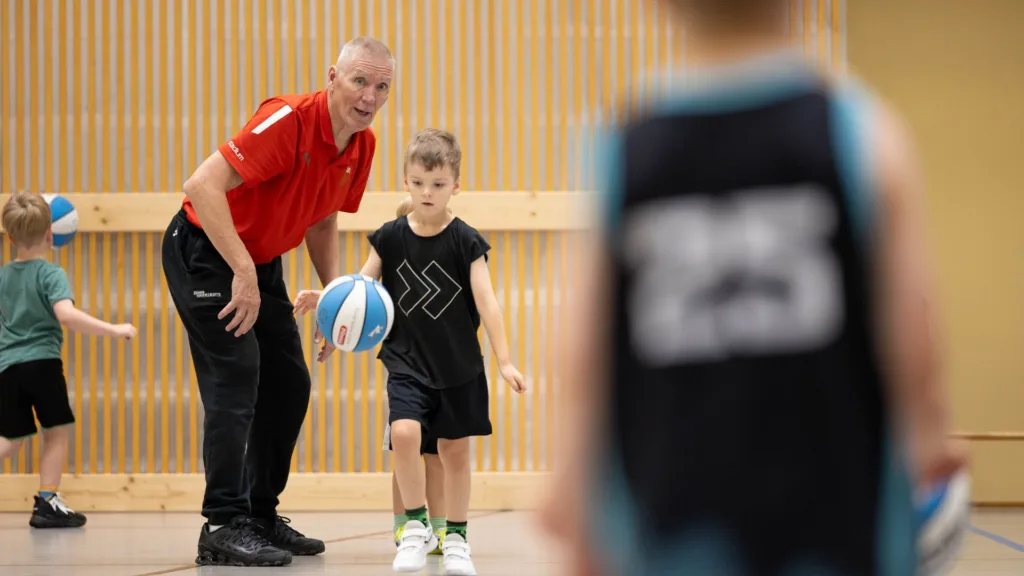
A good memory is passed down from one generation to the next
For Lindberg, the most rewarding moments haven’t been championships or trophies. They’ve been the moments when former junior players return to the gym years later with their own children. It shows that basketball and the club have left them with good memories. Even if the sport didn’t necessarily become a lifelong hobby, the experience has been so positive that they want to offer it to their own children as well.
– In my opinion, that’s what makes a first coach’s job so important. A coach doesn’t just teach ball handling or shooting technique. They can spark a child’s joy in physical activity, help them make friends, and help them feel, I can do this, too, and I belong here.
When a child leaves practice with a smile and asks when they’ll get to play again, the coach has achieved something truly important.
The Olympic Committee and sports federations are taking a new approach to children’s sport
Right now, children’s sport in Finland is at a turning point. Fewer and fewer children are getting enough physical activity, too many are dropping out of sport too early, and fundamental movement skills have deteriorated as everyday physical activity has decreased. Children are getting involved in organised sport at an increasingly younger age, they’re choosing their sport earlier, and, unfortunately, they’re also leaving club activities too soon.
In light of the research findings, none of these trends is positive for adopting an active lifestyle, learning physical skills, or building a career in high-performance sport.
The Finnish Olympic Committee and 40 sports federations are seeking a new direction for children’s sport. We want to strengthen the future of children’s sport in Finland. The sports community is doing everything it can to ensure that every Finnish child can continue to discover the joy of sport. All children should have the opportunity to participate, belong, dream, and engage in sport in their own way.
-> THE AGREEMENT ON CHILDREN’S SPORT WILL BE ANNOUNCED AT THE OLYMPIC COMMITTEE’S AUTUMN MEETING ON 28 NOVEMBER, 2026