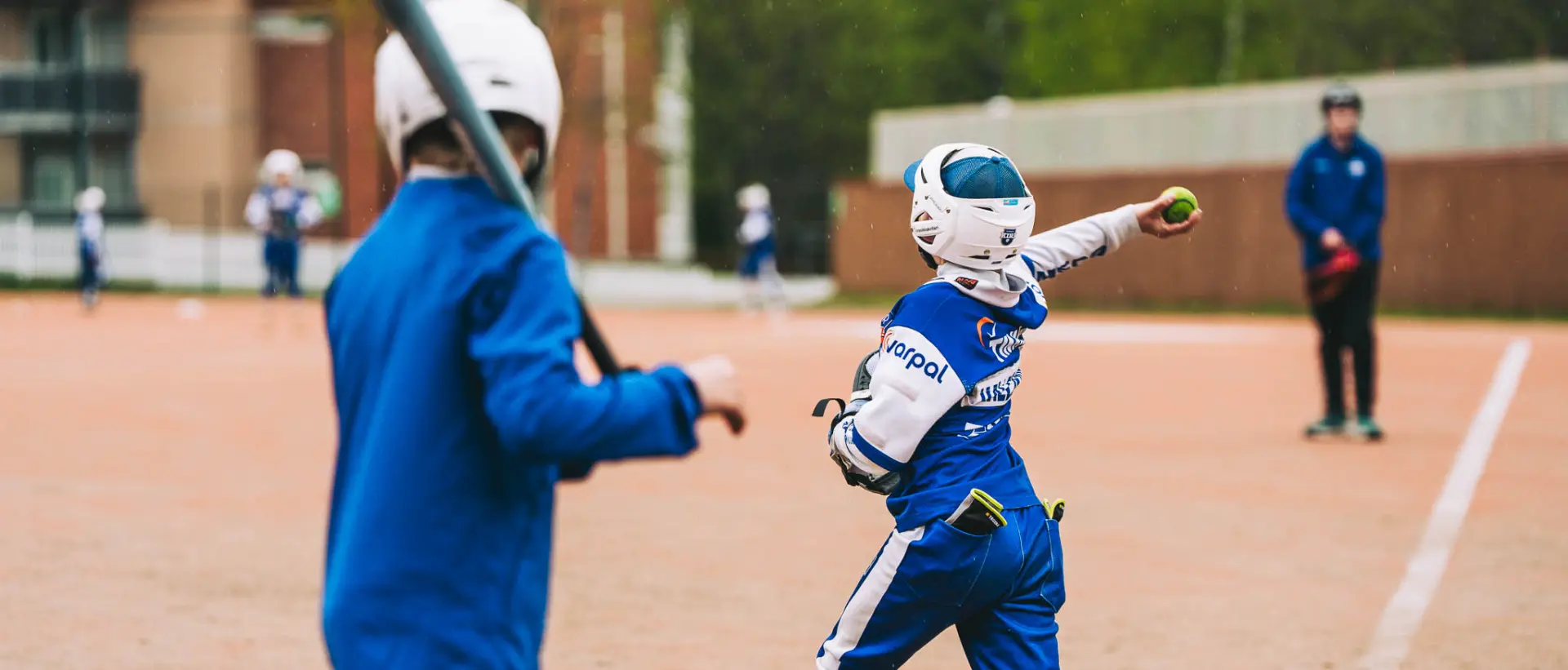
Jyväskylän Kiri & Kirittäret Juniors strongly adheres to the operational models outlined in the Finnish Baseball Federation’s framework for children’s sports, which the federation has developed in collaboration with other ball sports organizations. The club’s values reflect shared joy, a child-centered approach, and a spirit of sportsmanship.
Jyväskylän Kiri & Kirittäret Juniors aim to organize activities that are open to everyone and easily accessible. The goal is for the training groups to remain the same throughout the junior program. Skill-level grouping is done flexibly on a game-by-game, tournament-by-tournament, and camp-by-camp basis so that coaching resources are equal for everyone and the groups vary throughout the summer.
According to Roope Pöyry, the club’s junior director, playing takes center stage in the club’s practices. The sessions emphasize physical activity, an inspiring atmosphere, and the children’s and teenagers’ own insights.
– Our idea is that at least half of practice time should be devoted to playing and practicing the game. In practice, we place particular emphasis on small-group drills. We have also paid attention to our individual drills. Training sessions always begin with activities focused on volume and intensity, such as point drills or station work. These develop sport-specific skills while also strengthening basic motor skills.
The club’s activities are also aligned with the 6-on-6 format launched by the Finnish Baseball Federation. The goal is to increase players’ time on the field and thereby boost their active playing time.
– When compared to traditional 9-on-9 play, this format focuses on small-group play. Players take on a more active role, and skills such as hitting, running, and fielding are emphasized. At the same time, players get more exercise during the game, Pöyry explains.
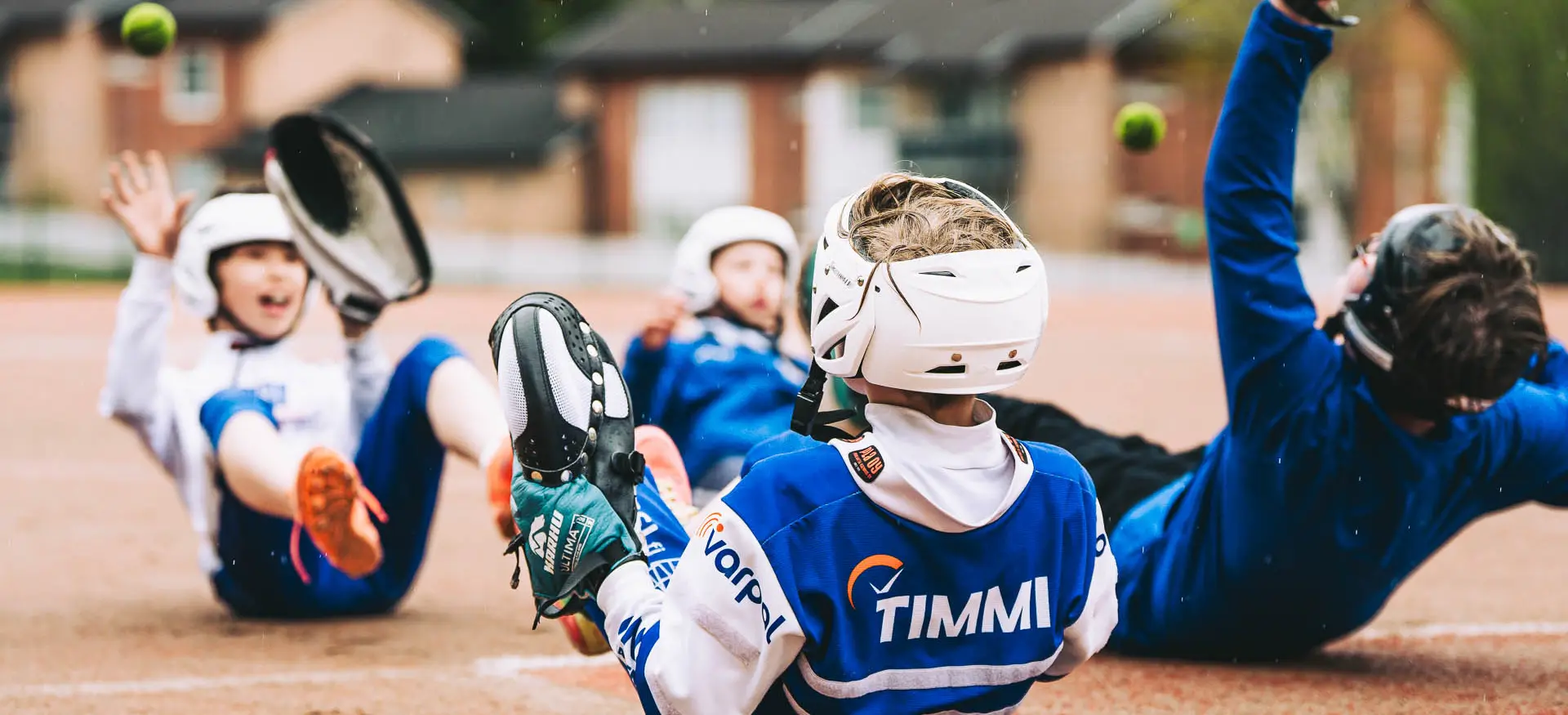
Our idea is that at least half of practice time should be devoted to playing and practicing game situations. In practice, we place particular emphasis on small-group drills.
Game Rule Pilots support the development of game literacy
In a problem-solving game like pesäpallo, understanding the rules is key. The rule-based game pilots developed by the Finnish Pesäpallo Federation help children and young people improve their ability to read the game and solve problems on their own.
Luka Hallikainen, 11, has been playing pesäpallo for three summers now. According to Hallikainen, his teammates and supportive coaches play a big role.
– Playing is the best part of my hobby. I also have friends and great coaches on the team. That’s been important, Hallikainen says.
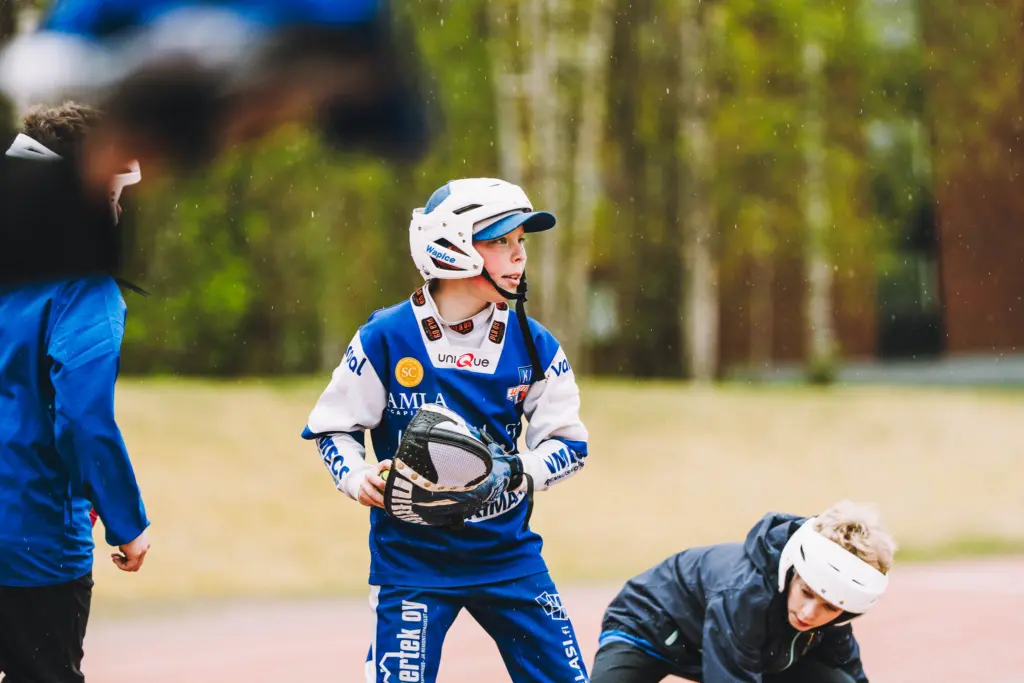
The game-rule pilots have also reinforced Hallikainen’s ability to read the game.
– Through this, I’ve learned about offsides, fouls, and penalties, among other things. This has helped me in my playing. Referee training has also been helpful.
The idea behind the game rules pilots is to help players improve their own skills.
– Players aren’t given ready-made solutions or answers. Coaches support them, offer options, and guide them, but they give players the space to learn the game on their own, Pöyry explains.
What is the purpose of smaller game forms and game rule pilots?
The Finnish Baseball Federation aims to increase physical activity, joy, enthusiasm, and children’s active participation in the sport. The idea is that children take ownership of their own participation and play.
The goal is to teach children to make their own observations and decisions on the practice field and in games, thereby fostering a sense of autonomy and competence.
Through these operational models and reforms, we aim not only to foster a clear path toward becoming a top-level athlete or player, but also to support personal growth in various aspects of life.
Physical activity is influenced by many factors
According to Pöyry, cooperation with children, young people, and parents has been seamless in the club’s day-to-day operations. Children and young people, in particular, have appreciated the fact that playing time has been increased during the club’s practices as well.
– The amount of time we spend on playing is the aspect for which we receive the most praise. For example, for our beginners, playing makes up more than half of our practices and events. I believe that’s why we’ve grown to become Finland’s largest junior club.
– Parents have really grasped the idea behind our approach and, at the same time, the importance of self-motivation. The amount of exercise gained through club activities alone isn’t enough to become a top-level player—or even to lead an active lifestyle. Our goal is to get children and young people excited about the sport so that they are motivated to play it in their free time as well. At the same time, however, we want to support participation in multiple sports. We believe that physical activity grows from the sum of different sports—not just from a single sport, Pöyry sums up.
Text translated with the help of AI.
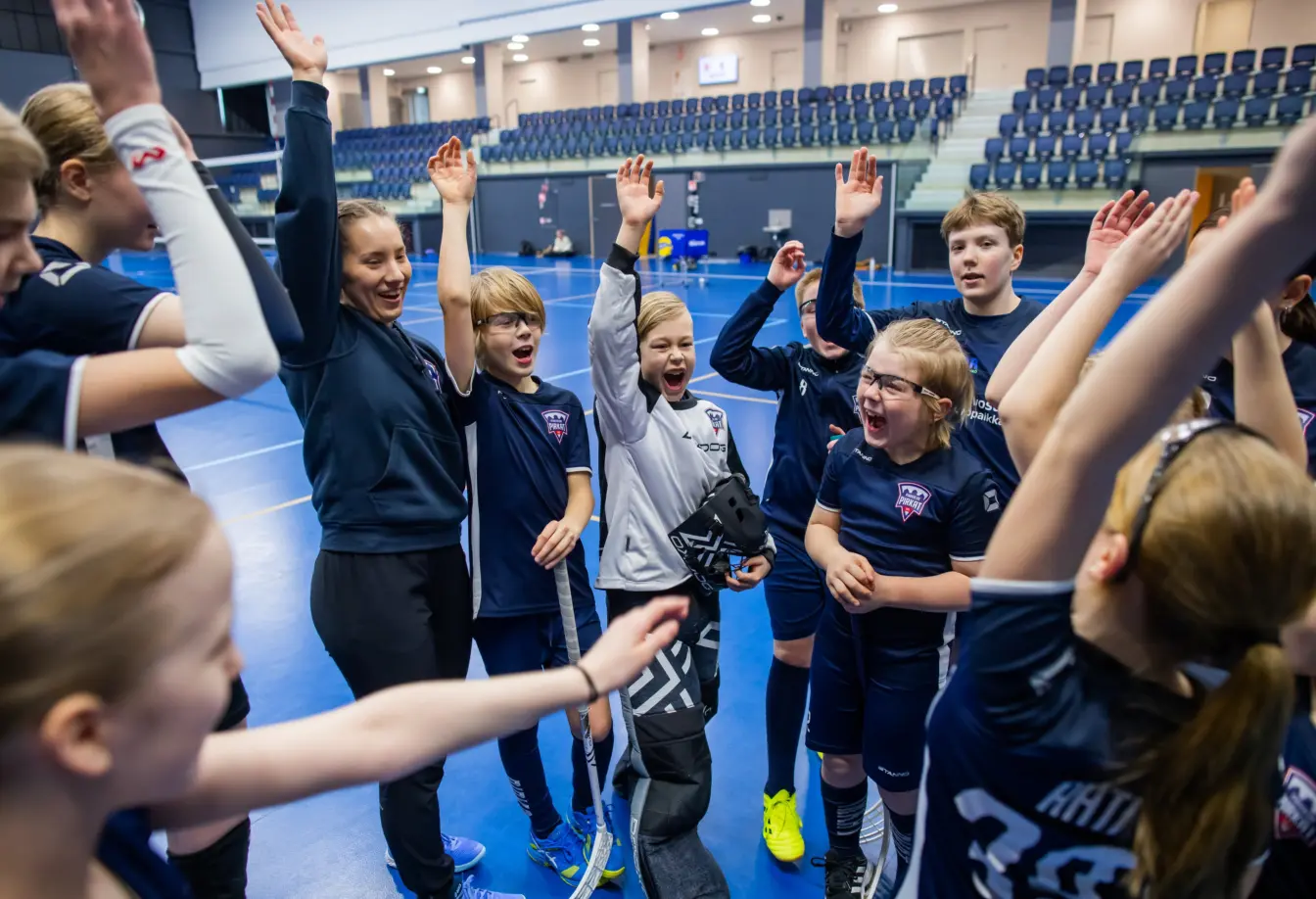
The Olympic Committee and sports federations are taking a new approach to children’s sports
Right now, children’s sports in Finland are at a turning point. Fewer and fewer children are getting enough exercise, too many are giving up their sports too early, and basic physical skills have declined as daily physical activity has decreased. Children are getting involved in organized sports at an increasingly younger age, they are choosing their sports earlier, and, unfortunately, they are also leaving club activities too early.
In light of the research data, none of these trends bodes well for adopting an active lifestyle, learning physical skills, or building a career in elite sports.
The Olympic Committee and 40 sports federations are seeking a new direction for children’s sports. We want to strengthen the future of children’s sports in Finland. The sports community is doing everything it can to ensure that every Finnish child can continue to discover the joy of sports. All children should have the opportunity to participate, belong, dream, and engage in sports in their own way.