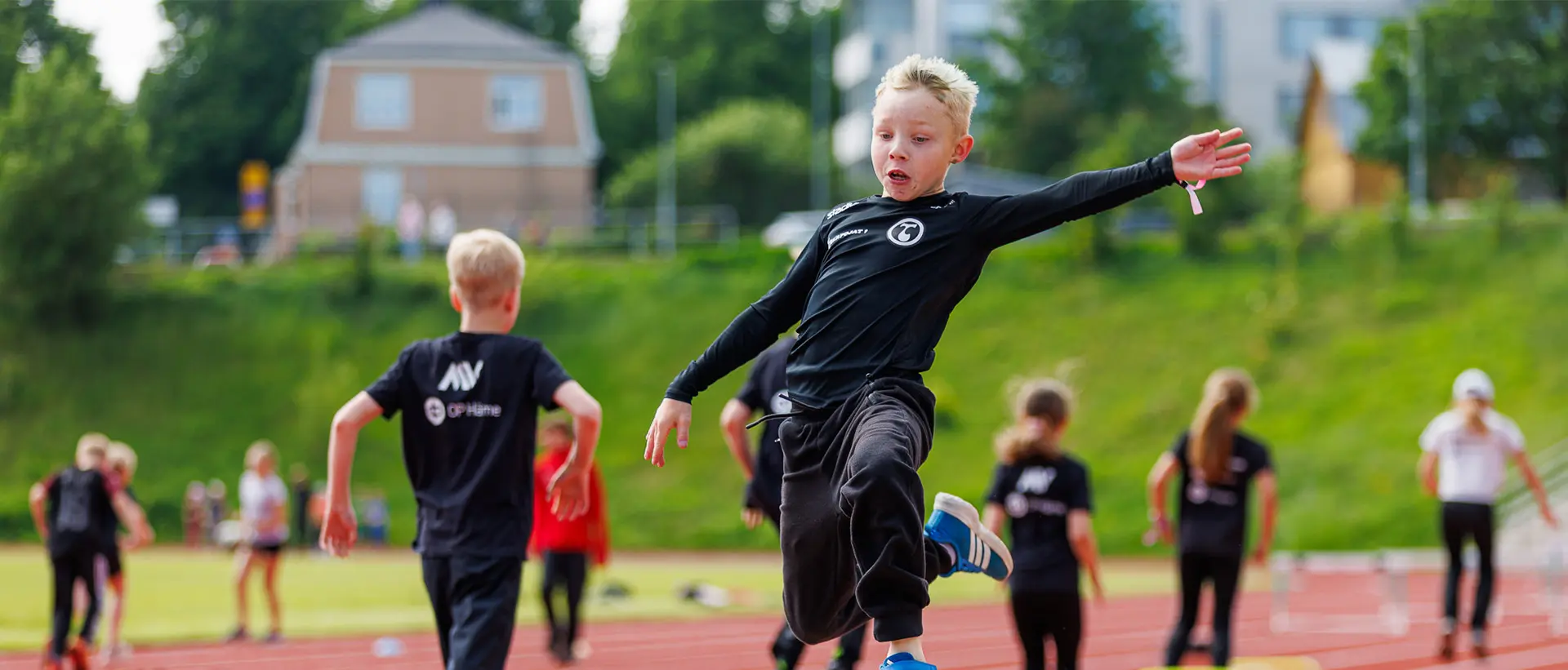
One of the key goals of the childhood phase of the Finnish Athletics Federation’s “Hätäilemättä huipulle” career path is multi-sport competition. “Tulevaisuuden Tähdet” multi-sport competition encourages children involved in track and field to compete in as many track and field events as possible.
At Hämeenlinnan Tarmo Athletics, the club’s diverse approach is clearly evident. According to Annika Rosberg-Haavisto, the club’s sports director, the club’s activities are based on multi-event training.
– Children grow and develop at very different rates. The differences can be particularly significant during the growth phase. It’s important for children to have the opportunity to try out different sports, and as a club, we want to encourage them to do so. Our club uses a multi-sport training approach as a starting point up to the U17 age group. This supports well-rounded training and provides a solid foundation for continuing a sports career or growing into an active adult.
According to Rosberg-Haavisto“Tulevaisuuden Tähdet” multi-sport competition has successfully encouraged children to expand the range of sports they participate in.
– Multi-sport competitions encourage children to develop their skills in various sports and to track their progress at their own pace. Through these competitions, children may discover sports they hadn’t even considered at first.
What is the “Tulevaisuuden Tähdet” multi-sport competition about?
- All children aged 8–13 who hold an athletics license are eligible to participate in the “Rising Stars” versatility competition.
- In the versatility competition, participants aim to earn as many points as possible by competing in as many events as possible within their own division. The competition runs for the duration of the calendar year.
- Points are awarded in the disciplines for which skill level requirements have been established. You can improve your scores from January through December of each year.
Thanks to the decathlon, the track and field season doesn’t hinge on individual performances
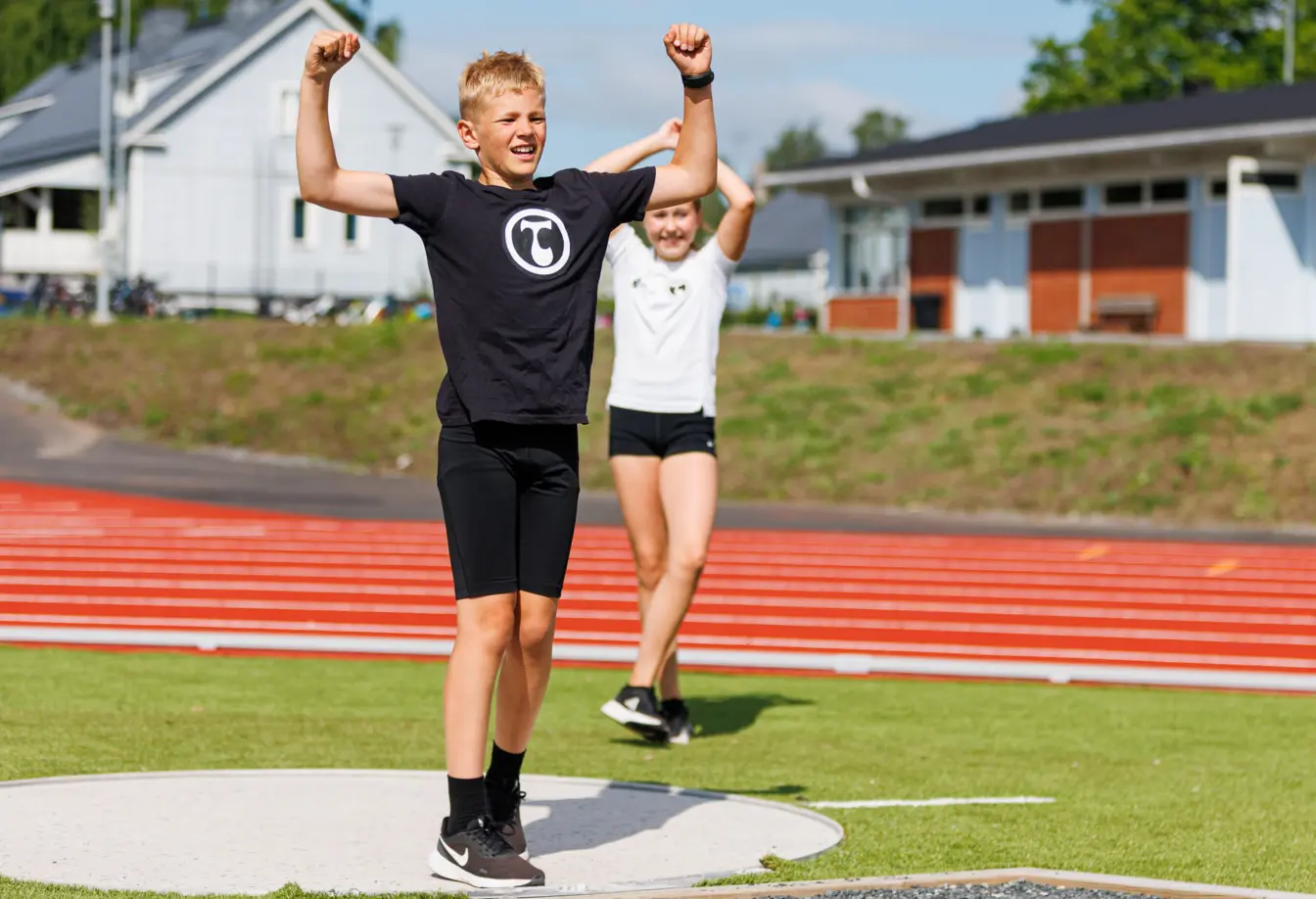
Julius Kelo, 11, and Eelin Mielonen, 12, see many benefits in all-around competitions.
– The best thing about multi-sport competitions is that you get to try events you might not have thought to try on your own. Overall, there are just more events to choose from, Kelo reflects.
– Since the competition lasts all year, it’s nice that a single performance doesn’t determine the final result. You can build up your score throughout the season. That’s motivating, adds Mielonen.
Kelo and Nielonen believe it is important that the track and field program not focus on a single event.
– My favorite events are the high jump and the hurdles. It’s nice to try different events because you can improve in multiple areas. You don’t have to make “one decision.” You can try a variety of things and see which event you like best, Mielonen explains.
Kelo is keeping his friend company.
– Personally, I like the three-event competition and the match format. It’s great to learn all the different disciplines and improve my performance. If I want to compete in the future, having experience in multiple disciplines will give me a solid foundation for that.
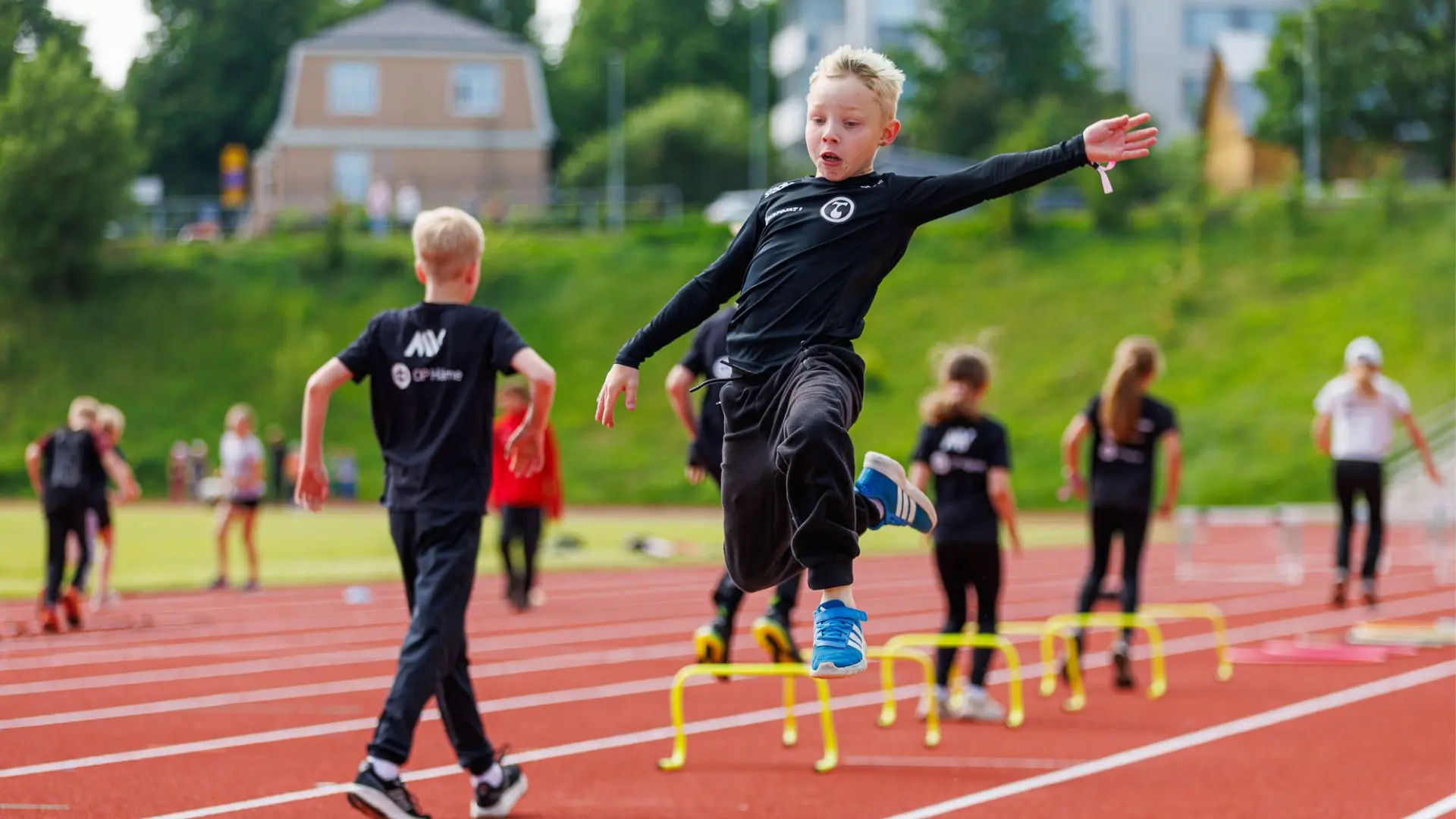
It’s nice to try different sports because you can improve in a variety of areas. You can try a wide range of activities and see which one you like best.
The goal of club competitions is to encourage more physical activity and athletic performance
Rosberg-Haavisto sees several benefits in multi-sport competitions. For example, a clear increase in participation has been observed in certain sports.
– The number of competitors in race walking has skyrocketed with the introduction of the multi-event competition. There has also been growth in the hammer throw and pole vault—these are now common fixtures on the competition calendar, even as events for young athletes.
– It’s a big advantage that we make it as easy as possible for children to compete. For example, girls and boys can now run in mixed heats. In addition, at Tarmo, we automatically organize children’s competitions as mini-tournaments, so that a single registration automatically enters them into three events. This brings more activity and more event performances to the competitions, Rosberg-Haavisto adds.
Both Rosberg-Haavisto and the club hope that the multi-event competitions will be extended to include older age groups as well.
– It would be great if we could extend this concept to include 14- and 15-year-olds as well. For this age group, it would be important to provide an extra incentive to continue participating in a variety of sports.
Text translated with the help of AI.
Photo and video: Anssi Mäkinen
The Olympic Committee and sports federations are taking a new approach to children’s sports
Right now, sports for Finnish children are at a turning point. Fewer and fewer children are getting enough exercise, too many are quitting sports too early, and basic physical skills have declined as daily physical activity has decreased. Children are joining organized sports at an increasingly younger age, they are choosing their sports earlier, and, unfortunately, they are also leaving club activities too early.
In light of the research data, none of these trends bodes well for adopting an active lifestyle, learning physical skills, or building a career in elite sports.
The Olympic Committee and 40 sports federations are seeking a new direction for children’s sports. We want to strengthen the future of children’s sports in Finland. The sports community is doing everything it can to ensure that every Finnish child can continue to discover the joy of sports. All children should have the opportunity to participate, belong, dream, and engage in sports in their own way.